
Ongoing dry weather set the stage for this year’s wildflower season in the Texas Hill Country as the area enters its seventh consecutive year of drought.
In a 2026 Wildflower Forecast published on their website March 3, the Ladybird Johnson Wildflower Center bemoaned the long dry spell.
“We may just have to look a little harder for bluebonnets on the side of the road this year in many locales,” said Andrea DeLong-Amaya, the Center’s horticulture educator and author of Texas Native Plant Primer. “We’re hopeful for more spring rain to bring out the later-blooming flowers. Bluebonnets are great, but the show gets even better as the spring season progresses.”
A late March ranch visit confirmed the dreary outlook for the season’s usual spring wildflower display.
Few or zero bluebonnets, and the usual Indian blanket and Indian paintbrush flowers were mostly absent on the two-hour drive from San Antonio to our place on the Llano River.
 Whitebrush in bloom Aloysia gratissima
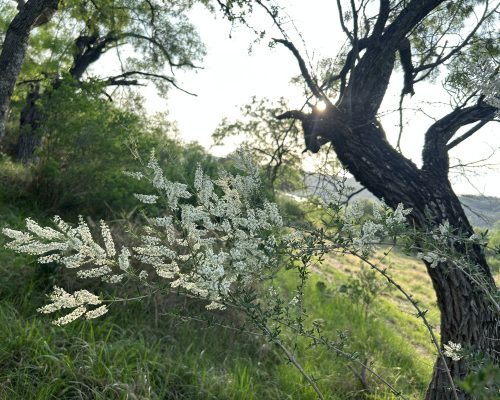
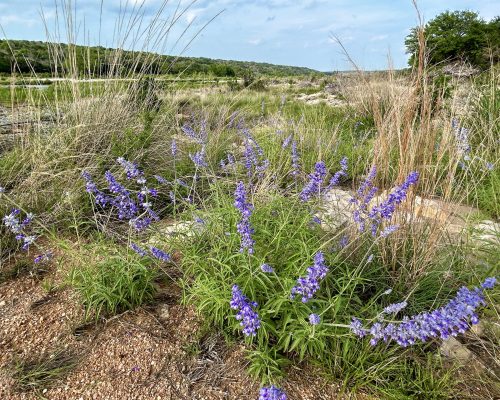
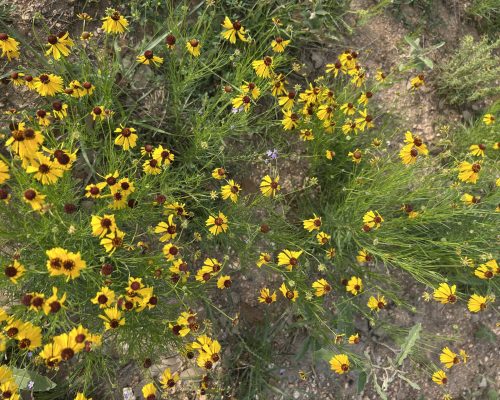
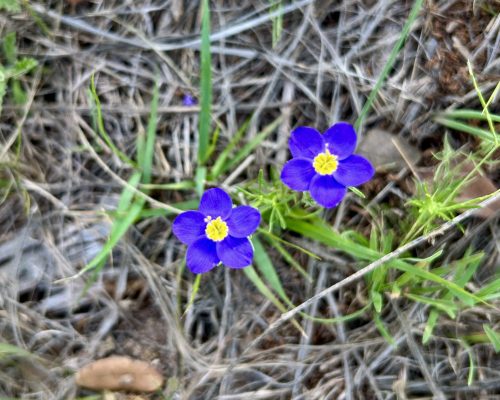
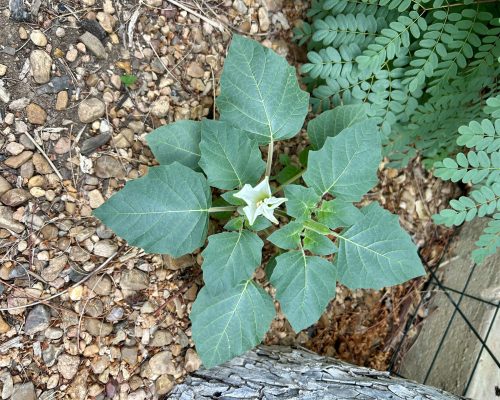
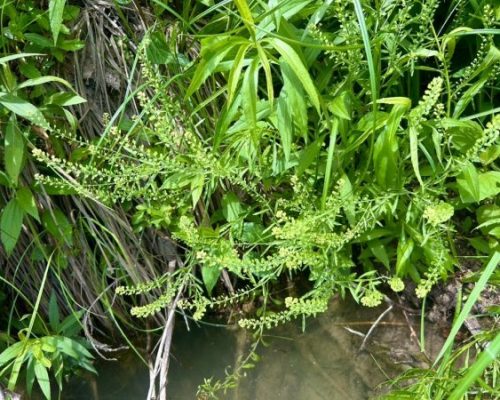
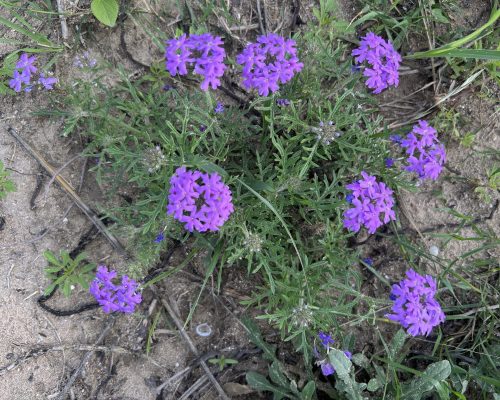
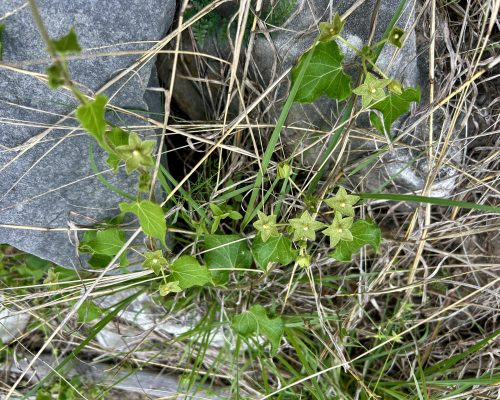
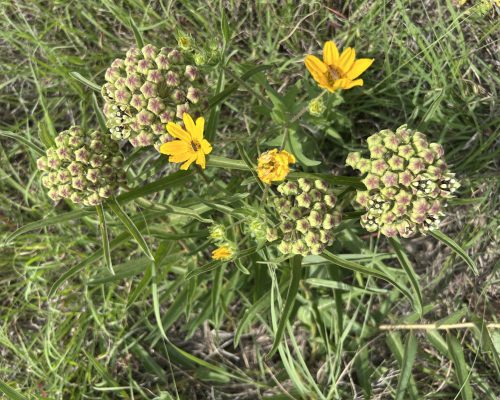
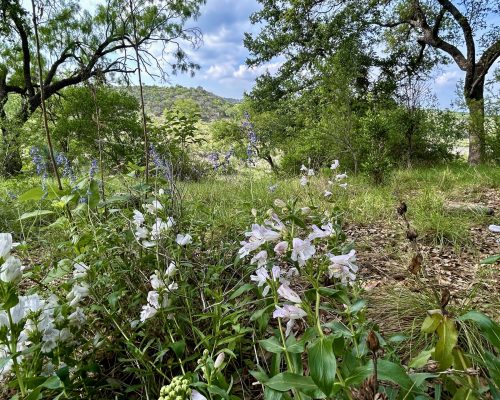
Click on the Latin name to look up the plant.
Grey, dry forbs dotted the landscape. Cracked, dry soil surrounded our picnic spot along the river, which was running low and slow.
But then the rains came.
Various storm systems and steady, rainy days have dropped several inches of rain on the Texas Hill Country and in the San Antonio area, even causing flooding in some locations. Following the dousing, late spring wildflowers emerged–ubiquitous, varied, and much appreciated by birds, bees, butterflies and others.
A hike around the ranch last weekend revealed a broad diversity of wildflowers, some of which I have never seen in these contexts.
For example: Peppergrass along the Llano River bank?
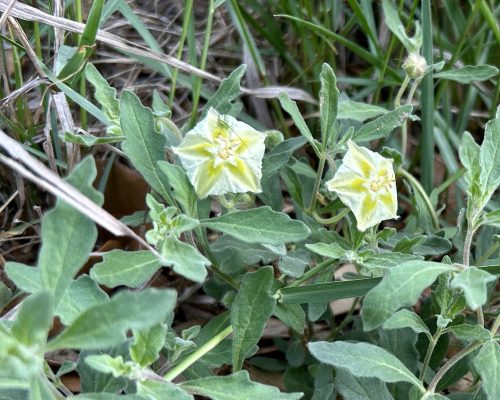
Never seen that. It usually grows out of inhospitable sidewalk cracks, empty lots and other unwelcoming environments. Nor do I recall ever seeing Velvet-leaf Mallow in bloom in the area surrounding our house.
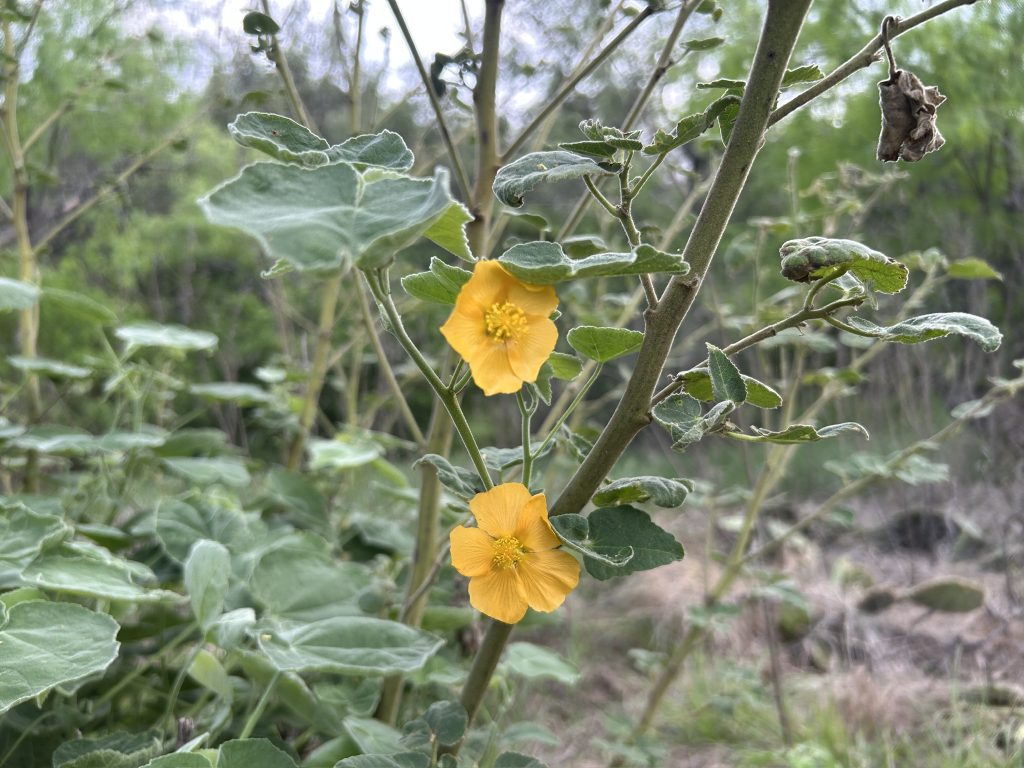
Velvet-leaf Mallow in the Texas Hill Country. –Photo by Monika Maeckle
Closer to the river, the Wild garlic/onion that populates our watershed demonstrated dramatic growth after sleeping quietly much of this mostly dry spring.
Last weekend, the native alliums were already forming their “bulblets” and scapes, prepping for the next generation and providing delicious ingredients for salads, stews and stir fry dishes. If you need some great recipes for Wild onions and Peppergrass, check out my recent book, Plants with Purpose: Twenty-five Ecosystem Multitaskers.
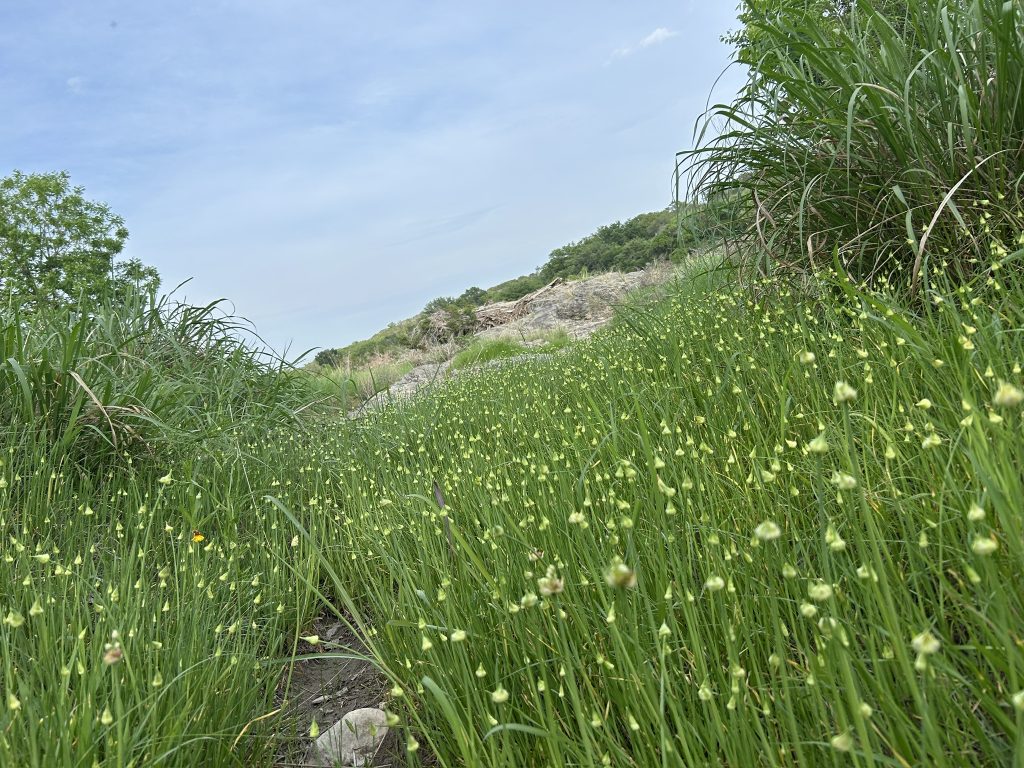
Scapes, anyone? Wild garlic/onion, a native allium, responded heartily to recent rains. –Photo by Monika Maeckle
“This rain has definitely improved things,” DeLong-Amaya said this week. “The Gallardias are insane and the Engleman’s daisies are doing really well.”
She speculated that the native perennials were capable of hanging on through the dry period because their longer tap roots can reach water sources stored deeper in the soil. “Late season annuals are really getting the boost from the rains,” she added.
Diane Gracia, president of the San Antonio chapter of the Native Plant Society of Texas, expressed admiration for the resilience of native plants.
“After the drought, our native wildflowers remind us they can be trusted. Deep roots, patient seeds and long awaited rain help them keep their promise,” she said.
Check out my books!
Monarch butterflies and other wildlife also appreciated the rain.
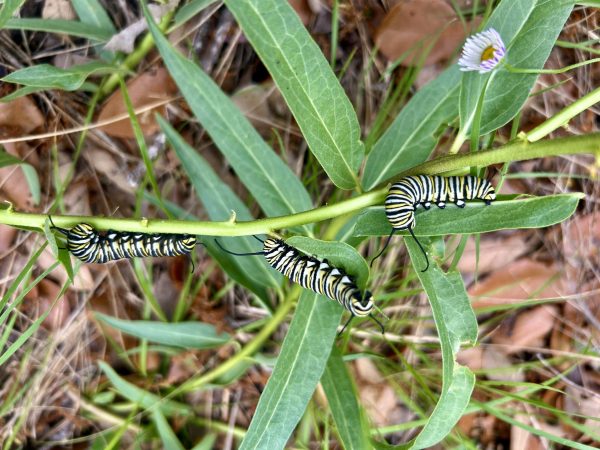
At the ranch, three different species of milkweed pushed out new shoots and flowers–Milkweed vine, Swamp milkweed and Antelope horns. We spotted several caterpillars and eggs on the migrating butterflies’ host plants. Beetles, moths and scorpions flourished as well, making available fodder for migrating birds.
Predictions call for more rain this week and weather forecasters insist we’ll be experiencing an El Niño later this year. According to the National Integrated Drought Information System, El Niño often translates into cooler, wetter conditions for the Southern U.S., including Texas.
Drought experts caution, however, that one good year of rain doesn’t eliminate six years of drought.
TOP PHOTO: Three late stage monarch butterfly caterpillars on Antelope horns milkweed in the Texas Hill Country. –Photo by Monika Maeckle
Related articles:
- What’s with all the plastic and garbage in my “natural” landscaping mulch?
- Lawn-and-order gardening ethos gives way to the lawnless
- San Antonio architect converts downtown parking lot into a native “prairie cloud”
- Wherehousebarn pollinator garden beckons butterflies and tenants to downtown San Antonio
- In the butterfly garden: use solarization to convert ugly grass into a vibrant butterfly garden
- Adding pollinator habitat to resilience gardens can boost yields and relieve stress
- Mostly native urban pollinator garden outperforms lawn every time
- Flower “bed” works overtime as bachelor pad for solitary bees
Like what you’re reading? Don’t miss a single article from the Texas Butterfly Ranch. Sign up for our email newsletter, like us on Facebook, follow us on Twitter, @monikam or on Instagram.
Leave A Comment