
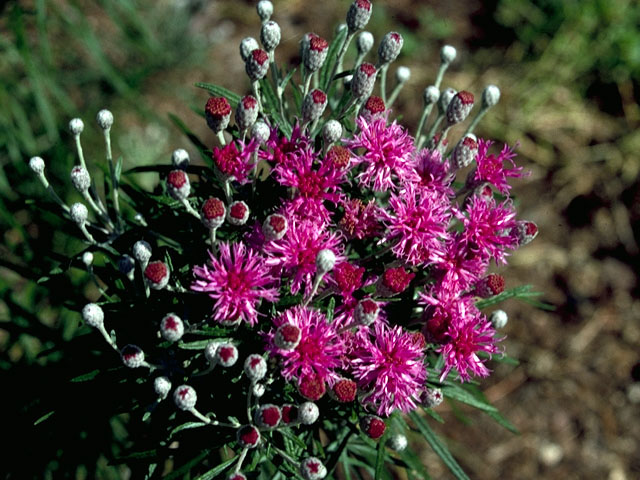
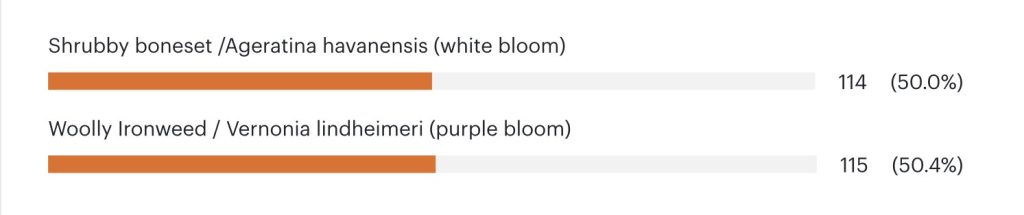
In a tight race that attests to the power of a single vote, Woolly ironweed bested Shrubby boneset in this year’s 2026 Pollinator Plant of the Year contest.
The race ran neck-and-neck the entire two-week voting period with the two contenders trading the lead daily. But after 229 votes, the drought tolerant purple bloomer in the Aster family pulled ahead of its white flowering counterpart in the final days of the contest. The final tally: Woolly ironweed 115 votes, Shrubby boneset 114.
The close election evoked strong reactions from some native plant aficionados.
“It was a tough call for me because ironweed has flowers of my favorite color, but I ended up voting for Shrubby boneset because I’m more familiar with it,” said riparian restorationist and Native Plant Society of Texas San Antonio (NPSOT-SA) immediate past president Lee Marlowe. “Since the vote was so close, I think we should consider them both winners!”
“I love it. Mostly because it’s not well known,” said Andrea Delong-Amaya, horticulture educator at Austin’s Ladybird Johnson Wildflower Center and author of The Texas Native Plant Primer: 225 Plants for an Earth-Friendly Garden.
Delong-Amaya lauded Woolly ironweed’s capacity for blooming in the heat of summer when many plants hold back. She pointed out that the 2026 winner needs good drainage and will rot and get fungal if left to sit damp. “Best to let the foliage dry–try watering in the morning so it can dry off as quickly possible. Soaker hoses recommended,” she added.
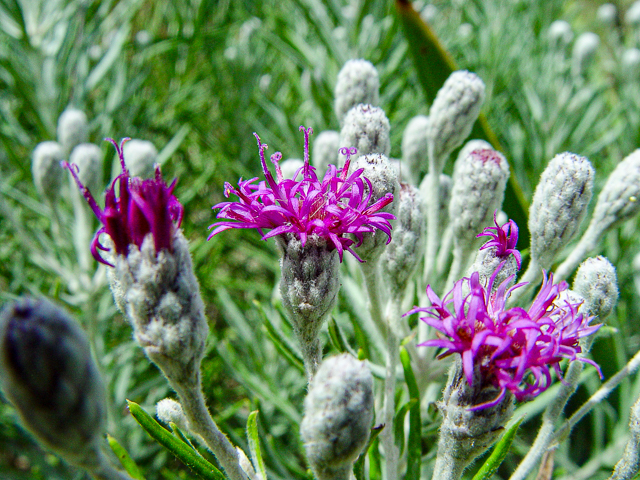 Woolly ironweed early in bloom. –Photo by Charles Ray Newsom, LBJ Wildflower Center
Current NPSOT-SA president Diane Gracia was quick to point out the lessons of the close race.
“In a state of red flowers and blue flowers, purple was the passion for Texas,” she said. “After a recount and heavy POLLinator turnout, ironweed wins by one vote. No shade to boneset—this was a strong matchup and proof that every voice and every flower counts.”
Woolly ironweed may be the least known Pollinator Plant of the Year ever elected. Bringing such plants the attention they deserve is one of the primary goals of the campaign. While nursery owners admit Woolly ironweed is difficult to find, they committed to working to bring this plant to market.
“Both plants rock, but ironweed’s resilience and purple punch make it a standout,” said Donald Gerber, owner with his wife Melanie of Pollinatives in San Antonio. “At Pollinatives, we’re big fans and will try hard to source some Vernonia lindheimeri for spring–
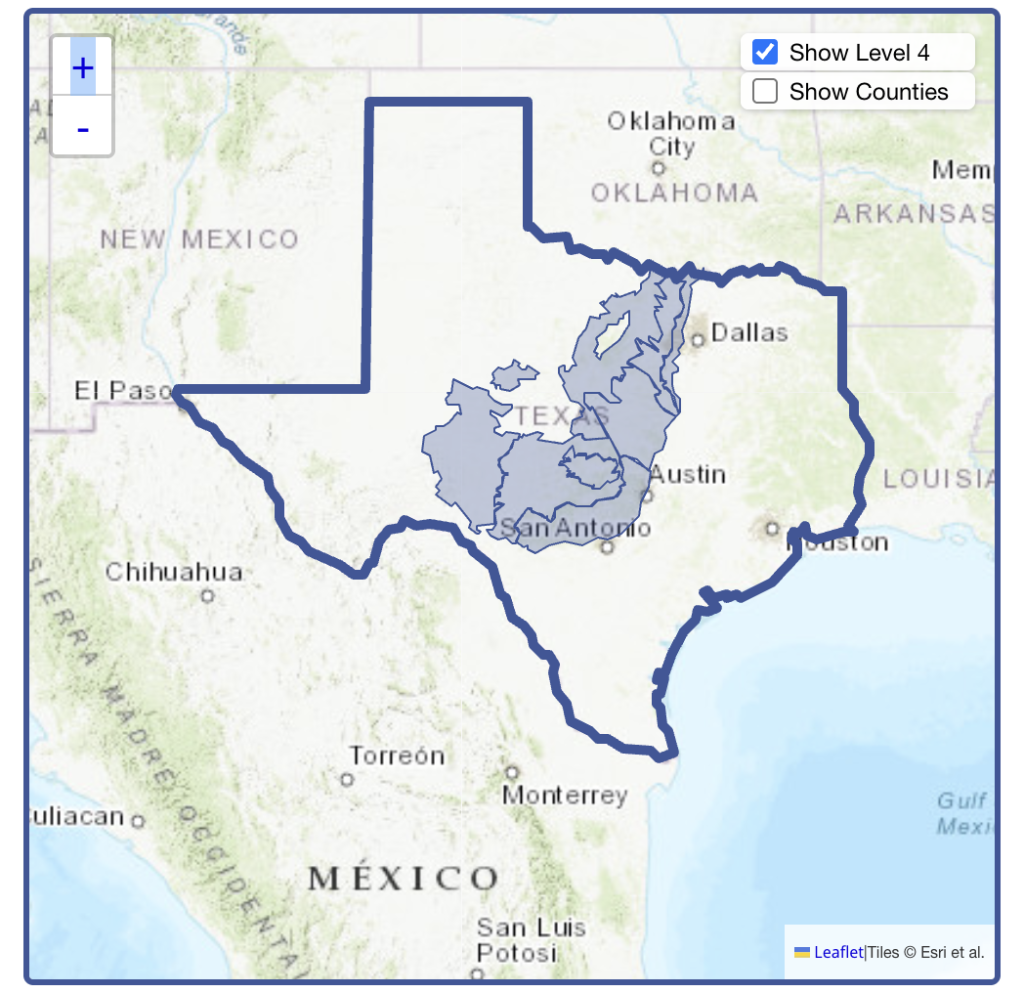
Native range of Woolly ironweed. –Graphic via Native Plant Society of Texas
fingers crossed on availability.” Gerber suggested following Pollinatives on social media for updates.
Drake White, who started The Nectar Bar, San Antonio’s first native plant nursery, also conceded that Woolly ironweed is difficult to find.
“It’s a species we’re currently working on in our growing list, with hopes of having it available this fall,” she said, adding that its victory is a sign that people are ready to embrace more plant diversity in their landscapes.
Thanks to all who voted. Below is a summary of Woolly ironweed’s appealing traits.
Woolly ironweed, Vernonia lindheimeri
Known for its good behaviour and fuzzy stems, Woolly ironweed can reach 30 inches in height and generally starts blooming in late spring and continues through early fall. Its blooms form in flat-topped clusters that number 20 – 60 flowers per head, making it a favorite of pollinators.
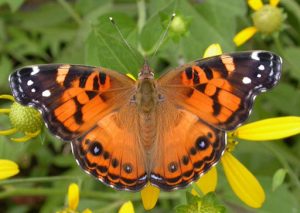
Woolly Ironweed is a host plat to the American lady butterfly. — Photo by Patrick Coin
The plant thrives in sand, loam, and caliche, requires little water and prefers full sun. It does especially well in rocky limestone hillsides and shallow soils.
Pollinators adore its disc style flowers and birds use its upright structure for nesting. Woolly ironweed is known for its resilience and tough nature–it’s roots are famous for being as sturdy as iron, thus its “ironweed” monicker. The plant has a bitter taste and stout wiry stems, and is generally avoided by livestock and deer. Woolly ironweed also serves as a host plant to the American lady butterfly, Vanessa virginiensis.
Another Texas native ironweed, Western ironweed, exhibits the same traits as its Woolly sister, and is another good option in the same family.
As mentioned above, Woolly ironweed is not widely available. Don’t let that stop you from asking your local nursery about it to generate demand. Hopefully, your requests will result in increasing its popularity.
Started in 2019 by the Texas Butterfly Ranch, the Pollinator Plant of the Year campaign aims to raise awareness of the unsung plant heroes of the pollinator garden. Many overlooked, native plants are frequently unavailable and ONLY found at seasonal pop-up plant sales. Some are only found in the wild. If you miss these occasional opportunities to procure these plant gems, you’re out of luck.
Commercial and retail nurseries often cite “lack of demand” for not stocking these under-appreciated plants, so they are absent from their stores. That said, the goal of our Pollinator Plant of the Year campaign is to drive demand for more native plants at gardening centers, local nurseries and big box stores. We encourage you to go to your local nursery and request these plants when you’re shopping for plants to occupy your landscape.
Woolly ironweed follows previous winners, Cowpen daisy (2019), Gregg’s purple mistflower (2020), Frostweed (2021), Gayfeather (2022), Mealy Blue Sage (2023), Clammyweed (2024) and Beebalm (2025).
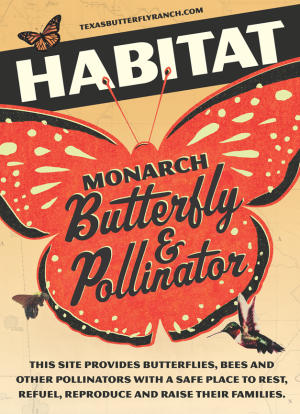
Let your neighbors or HOA know why your pollinator garden looks the way it does–get a pollinator habitat sign that announces your intentionality.

Check out my books!
TOP PHOTO: Woolly ironweed –Photo by Norman-G.-Flagg-Woolly via LBJ Wildflower Center
Related articles:
- Time to vote for the 2026 Pollinator Plant of the Year: Shrubby boneset or Woolly ironweed?
- Blue Curls or Beebalm? Please vote for the 2025 Pollinator Plant of the Year
- Past “Unofficial” Pollinator Plants of the Year
- Lawn-and-order gardening ethos gives way to the lawnless
- San Antonio architect converts downtown parking lot into a native “prairie cloud”
- Wherehousebarn pollinator garden beckons butterflies and tenants to downtown San Antonio
- In the butterfly garden: use solarization to convert ugly grass into a vibrant butterfly garden
- Adding pollinator habitat to resilience gardens can boost yields and relieve stress
- Mostly native urban pollinator garden outperforms lawn every time
- Flower “bed” works overtime as bachelor pad for solitary bees
Like what you’re reading? Don’t miss a single article from the Texas Butterfly Ranch. Sign up for our email newsletter, like us on Facebook, follow us on Twitter, @monikam or on Instagram.
Very nice! I ended up not voting this year as I liked both plants. I can see why it was a tight race!
Both winners. And the biggest winner is highlighting these native plants so that mainstream nurseries will carry them. Thank you, Monica, for your hard work!