
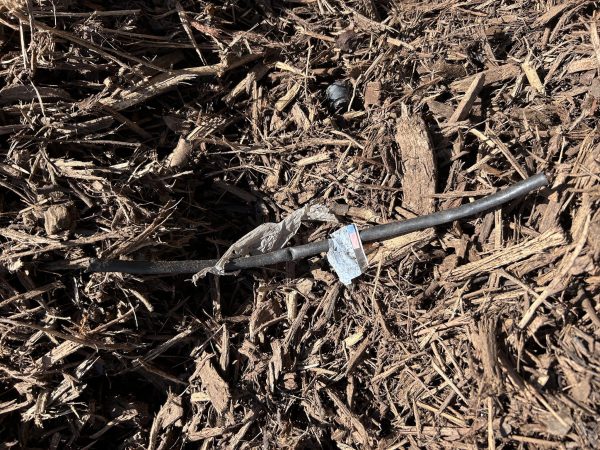
Lesson learned: when it comes to mulch, you get what you pay for.
I recently volunteered for a landscaping project that requires a substantial amount of mulch. Tons, in fact.
My son Alexander Rivard bought a home in an historic San Antonio neighborhood that included a massive, Bermuda grass lawn. Not surprisingly, I lobbied to turn part of the lawn into a pollinator habitat. Alex agreed.
Given the nonexistent budget, my frugal nature first led me to the City of San Antonio’s free mulch program. For a small fee, San Antonio allows residents to dump natural trash–paper bagged leaves, shrubs, tree branches, woody vines, limbs, bushes, and other natural growths–at two brush collection centers. They then convert this natural matter into “coarse ground mulch,” and make it available for FREE to residents willing to come load it themselves.
For another small fee, (three cents per pound with a 20-pound minimum), residents can purchase “fine ground mulch.” Bulk loading into a truck or trailer are included with this fee.
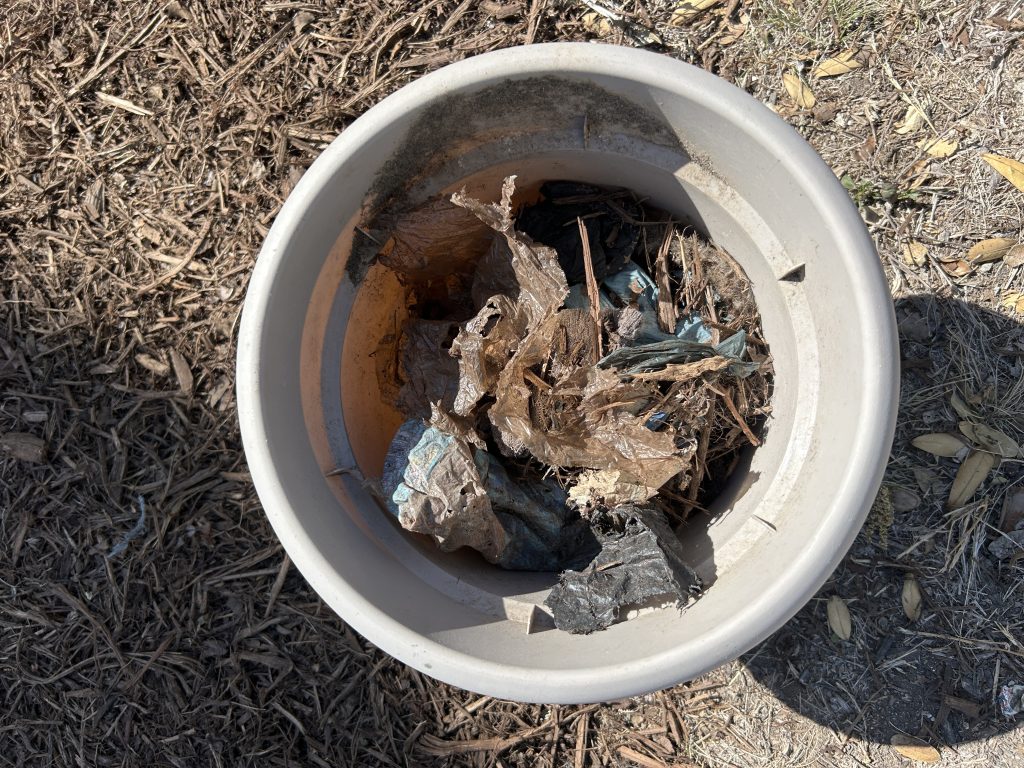
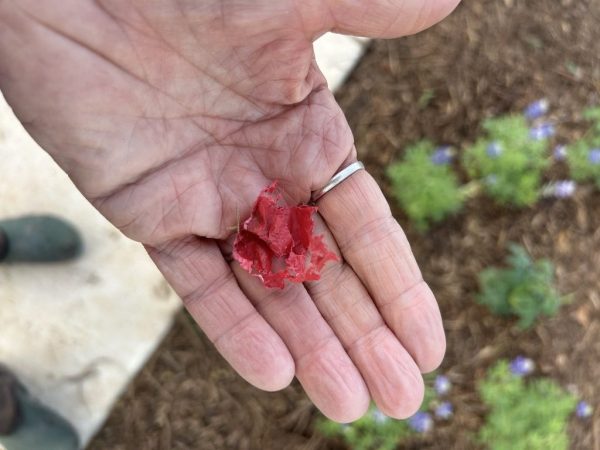
Small sampling of the bonus ingredients in my Burnin’ Bush mulch. –Photo by Monika Maeckle
Its affordability is what led me to purchase 2,200 pounds of the City’s fine ground mulch, which was dumped into the back of our trailer with a skid loader. Total cost: $66, plus the time and mileage to the recycling center.
As we spread the material over the cardboard we had laid down for a sheet-mulching process that would smother uninvited plants, I was surprised at the occasional plastic, aluminum and detritus that riddled the mulch.
Its bargain pricing made its imperfection slightly understandable, but not excusable. Given that the City utilizes residential brush, it makes sense that occasional garbage would sneak into the piles. When I approached City officials for an explanation, they prompted me to file an open records request, which I did. Stay tuned.
Surely, if I paid a bit more, would I find more pristine mulch?
After comparing prices online, a search led me to Burnin’ Bush mulch, a local commercial enterprise. From the company website: “Burnin’ Bush LLC has pioneered new, organic, and cost-effective processes to make the highest quality mulches, composts, soils, and aggregates at the best price.”
Sounded good, so I placed an order for 15 cubic yards of the Texas Double Grind, supposedly comprised of native trees from Central and South Texas at $15 a yard. Given Alex’s location more than 15 miles from Burnin’ Bush headquarters, delivery would add $115 to the tab. Total cost with taxes: $357.
The dump truck arrived on time and poured an estimated 10,000 pounds of dark, earthy shredded trees into a pile in Alex’s side yard. The woodsy, earthy smell permeated the air. We started filling the wheelbarrow.
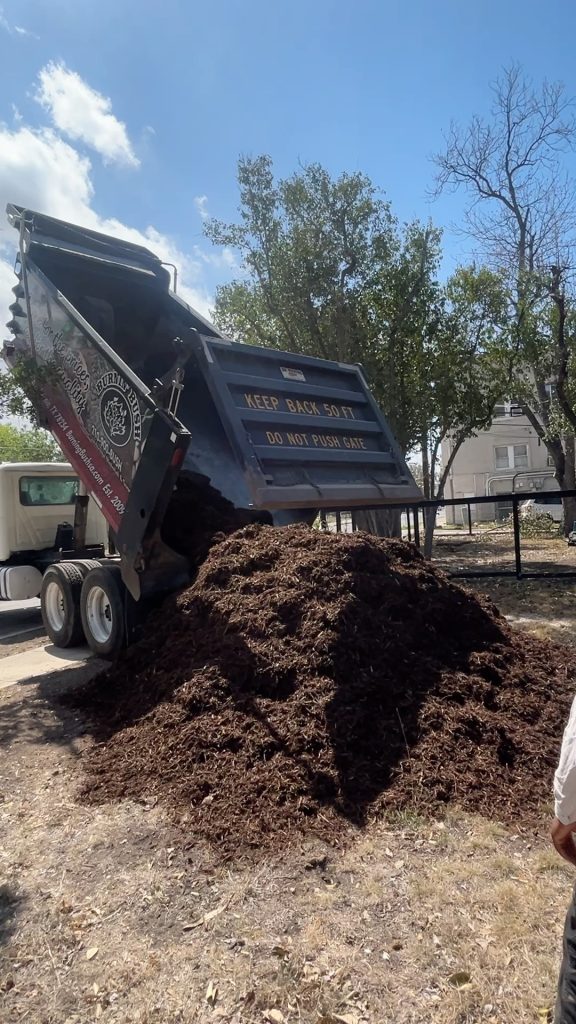
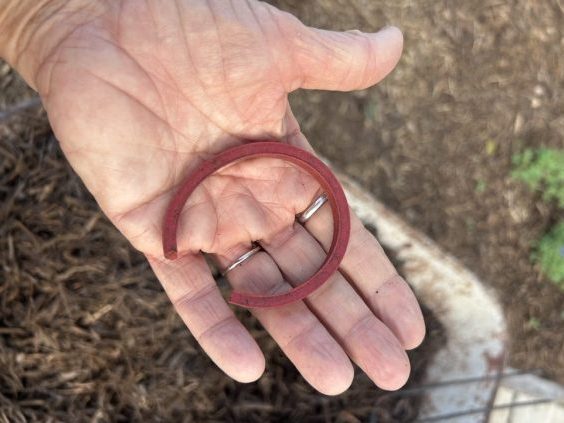
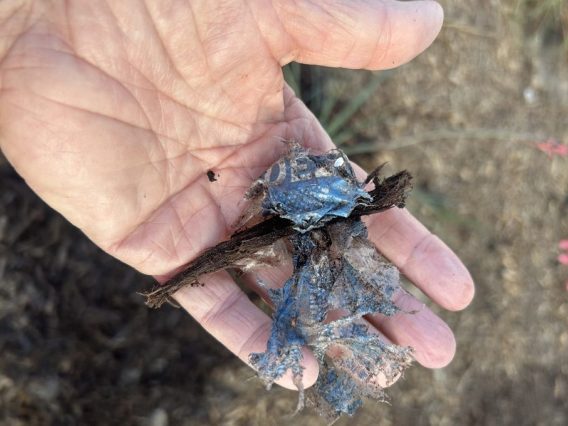
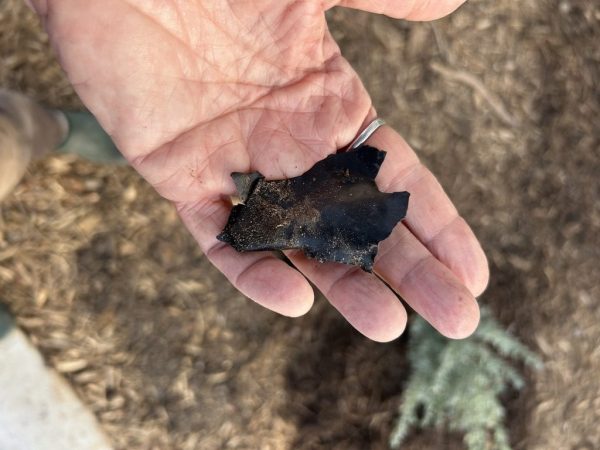
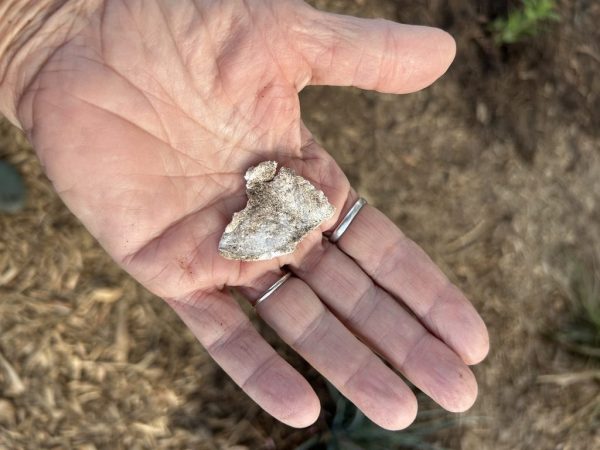
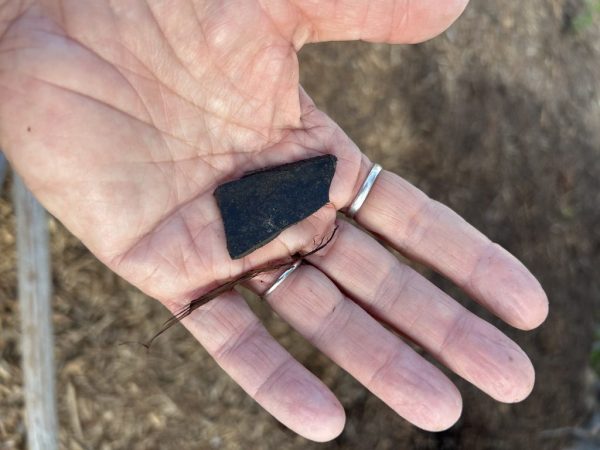
Burnin’ Bush mulch delivery includes plenty of plastic and trash. –Photo by Monika Maeckle
Turns out our native Texas tree mulch included bonus ingredients. Plastic, aluminum, zip ties, even a piece of electrical cord occupied the mound, as did other unnatural detritus. Surprisingly, the trash in this mulch was much more ubiquitous than what I had bought from the City.
Burnin’ Bush apologized profusely when I registered my dissatisfaction by phone.
“We do have a zero trash policy here for people who do bring brush and charge and try to pull out all trash we find and pick through our brush,” texted Sophia, who answers the phone at Burnin’ Bush. “We try our best to keep our mulch as clean as possible. We apologize for the inconvenience that happened today.”
They offered two options: they could pick up the mulch or I could keep it and get a refund for half of the mulch fee, but none of the $115 delivery charge. I chose the latter.
Thus began my quest to understand: what is going on with all the plastic and garbage in our “natural” mulch?
Burnin’ Bush owner Waylon Wehmeyer explained the challenges of keeping people from dumping garbage with their brush. The company even charges fines if inappropriate trash is found mixed in with the organics. More than 40 people have been permanently banned from dropping off material because of their repeated offenses of hiding garbage under mulch material.
“It’s $5 for a water bottle to $100 for a bag of trash,” said Wehmeyer. He added that his staff has found sledgehammers, a chainsaw, pole saws, even a lawn mower hidden under mounds of brush. “I don’t know if they dumped it on purpose or just left it in there by accident. Once a guy was just cleaning out his truck, throwing Whataburger cups in with the brush.” A common ruse is to hide plastic bags of leaves or garbage on the bed of a truck or trailer piled with brush.
“People are just stupid,” said Donald Gerber, co-owner of Pollinatives, a native plant nursery in San Antonio.
Before his career in the native plant business, Gerber spent 20 years as a civil engineering technician at a landfill in California. He has first hand experience in how the mulch gets made.
“Blame the homeowners who are supposed to be separating green waste, when their trashcan is full,” he said. “They throw trash in with the organics.”
Gerber said cheap mulch is from residential collection. He’s seen organic trash shrink-wrapped on a pallet, which also includes nails. The entire package is then injected into a mulching machine. “Is somebody gonna sit there and pull all the nails out of the palettes? No.”
“That’s right. The green bin started it all,” said David Rodriguez, A & M Agricultural Extension agent for Bexar County, who manages San Antonio’s Master Gardener chapter.
Brandon Kirby, a partner at Rainbow Gardens, a San Antonio nursery with two locations, cautions buyers to beware of bulk mulch.
“It IS possible to buy clean mulch, but I recommend bagged products,” he said.
Kirby pointed out that entities like Burnin’ Bush and the City of San Antonio allow homeowners to drop off any kind of yard debris.
“They can make mulch cheaply because they’re allowing community drop-off,” he said. “Someone brings a trailer load of sticks but there’s also leaf bags inside.”
Kirby said he prefers to source mulch from East Texas where a large forestry industry thrives. A company will contract with a developer who is clearing land for new home sites, and the mulch is “clean from the trees.”

He cautioned gardeners to beware of biosolids, an ingredient contained in certain mulch products. Biosolids, made from treated sewage and other waste, can contain forever chemicals and pharmaceuticals that can literally poison your yard. “The toxicity can turn your garden sterile.”
Others pointed out that residentially sourced mulch can also contain unwanted and invasive plant seed.
“You’re gonna have a lot of ligustrum and chinaberry seeds in there,” said Drake White, founder of the Nectar Bar, San Antonio’s first native plant nursery.
Premium mulch products exist, and both Gerber and White recommend Whittlesy’s Mulch of Austin. “They don’t take free mulch or have deals with tree trimmers so they have more control over their materials,” noted Gerber.
Got a story about mulch? Share it the comments.
TOP PHOTO: Electric cord included in my mulch. No extra charge. –Photo by Monika Maeckle
Related articles:
- Lawn-and-order gardening ethos gives way to the lawnless
- San Antonio architect converts downtown parking lot into a native “prairie cloud”
- Wherehousebarn pollinator garden beckons butterflies and tenants to downtown San Antonio
- In the butterfly garden: use solarization to convert ugly grass into a vibrant butterfly garden
- Adding pollinator habitat to resilience gardens can boost yields and relieve stress
- Mostly native urban pollinator garden outperforms lawn every time
- Flower “bed” works overtime as bachelor pad for solitary bees
Like what you’re reading? Don’t miss a single article from the Texas Butterfly Ranch. Sign up for our email newsletter, like us on Facebook, follow us on Twitter, @monikam or on Instagram.
I have had good results using “getchipdrop.com” in North Dallas County. I believe they advertise in horticultural magazines. My understanding is that arborists chip limbs and trees cleared by their crews and then drive directly to a client’s driveway and drop the load of chips. The people I have worked with have been willing to drop part of a truck load if I need a smaller amount. I’ve never received anything other than ground up tree trimmings, leaves and limbs, usually very fresh since they come directly from a job site.