
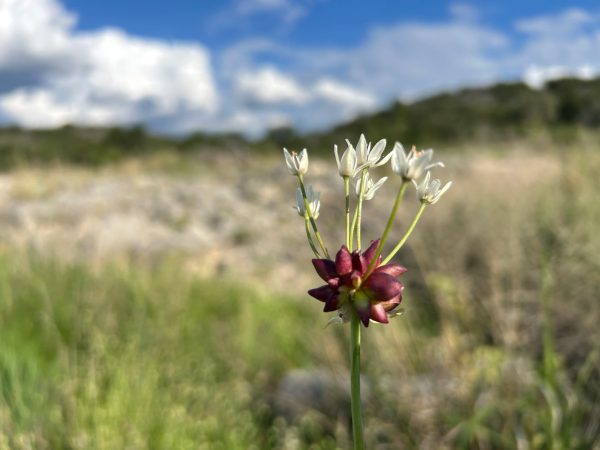
Every spring our family relishes the Wild onion crop that we find at our property along the Llano River. The delectable Allium canadense, also known as Wild garlic and Meadow garlic, populates our broad watershed, and its availability shifts with the amount of rain and heat.
Typically, spring is prime season with the chive-like bulbs sprouting from the muddy watershed, slowly sporting flowers and bulblets–tiny “bulbs” that are clones of the plant, and which generally fall to the ground to sprout anew from the soil.
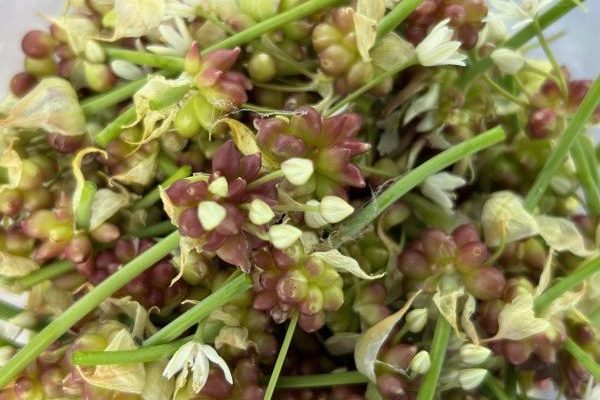
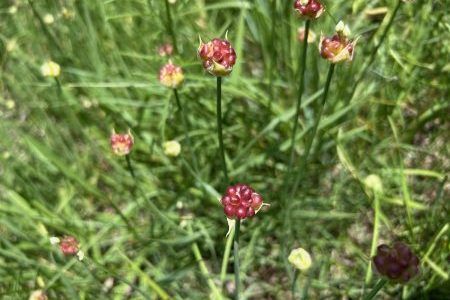
But this year, the extreme early heat caused the bulblets to start sprouting early–and from the top of the plant. Experts appear to disagree whether or not this is unusual or common.
 Wild onion bulblets and sprouts. Delicious and eye-catching.

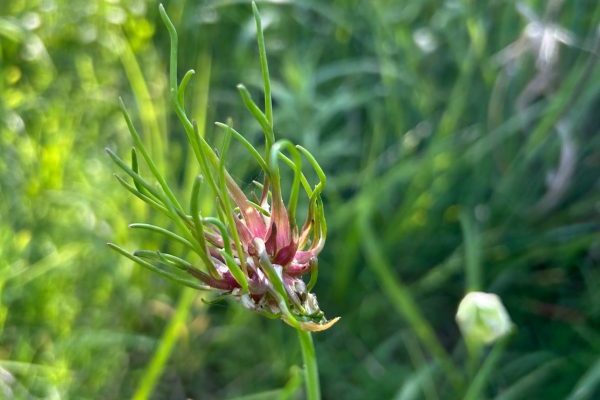
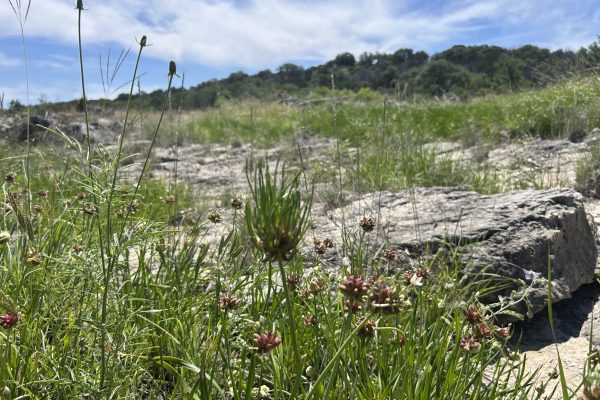
“Yes, unusual phenomenon,” said A & M Agricultural Extension agent for Bexar County David Rodriguez, who manages San Antonio’s Master Gardener chapter. He compared the behaviour to bolting, but said it is likely varietal, depending on the particular type of onion. The early, intense heat experienced in May caused the onions to rush their reproduction.
David Creech, Stephen F. Austin State University professor emeritus of agriculture and director of SFA Gardens in Nacogdoches, said the behaviour is pretty standard.
“Not uncommon, heat related . . . they are ‘bulbils’–besides seed, this is one way to start a new plant, a clone,” Creech explained, adding that the bulbils typically fall over and root. Depending on conditions, they may dry out and wither.
Either way, Allium canadense, makes for an excellent addition to your landscape.
Every part of this plant is edible. The bulbils can be sauteéd with vegetables or studded into a cut of meat, the flowers make a lovely, edible garnish, and if you pull them out with the root, you basically have a wild green onion. Since they often bloom early when little else is available, bees and butterflies love them. And the plant’s oniony smell makes it deer resistant.
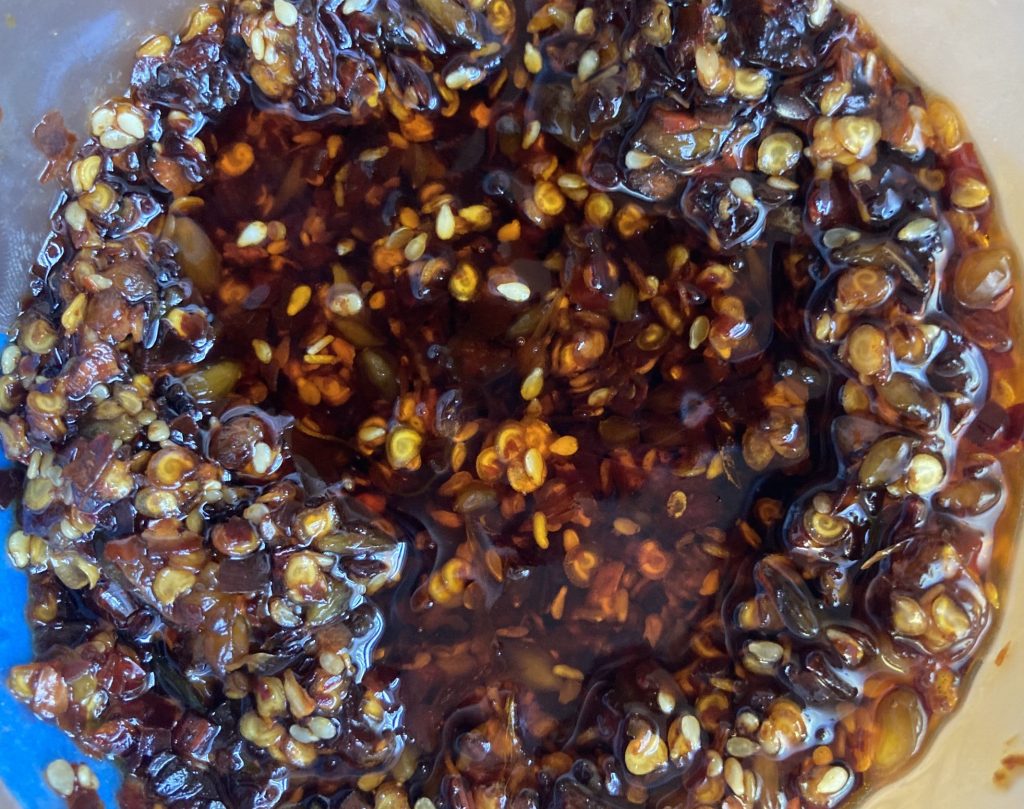
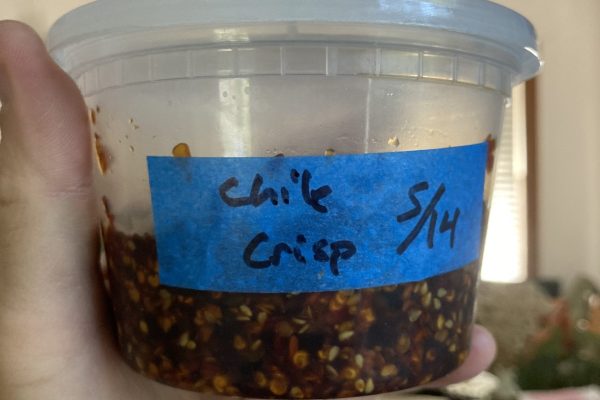
Chile crisp made with Wild onion. –Photo by Alexander Rivard
This year’s strangely sprouting crop inspired me to make Spaetzle, a special German pasta, and serve it with the wacky onion bulblet tops as a garlicky, eye-catching garnish. Our son, Alexander Rivard, made a spicy chili crisp, adapting a New York Times recipe by substituting wild onions for dried minced ones. How did it turn out?
“Delicious. Highly craveable. Glad I made extra to give away,” said Rivard.
While some nurseries carry Wild onion, this highly functional plant is likely thriving somewhere near you–probably near a stream or in the watershed.
The compound in onion responsible for its distinctive smell also makes it deer proof, which helps its establishment. Its bulbous root ball keeps it intact during floods and holds soil in place. Almost a dozen species flourish in Texas and they are native to much of the United States. Dig up a few, put them in your yard or in a pot on a sunny windowsill, and water regularly. You’ll have fresh chives on call and will be eating and sharing them soon enough.
With its conspicuous flowers, deer resistance, pollinator attractions and culinary uses, multitasking wild onion deserves a spot in your landscape.
Learn more about Wild onion in my new book, Plants with Purpose: Twenty-five Ecosystem Multitaskers.
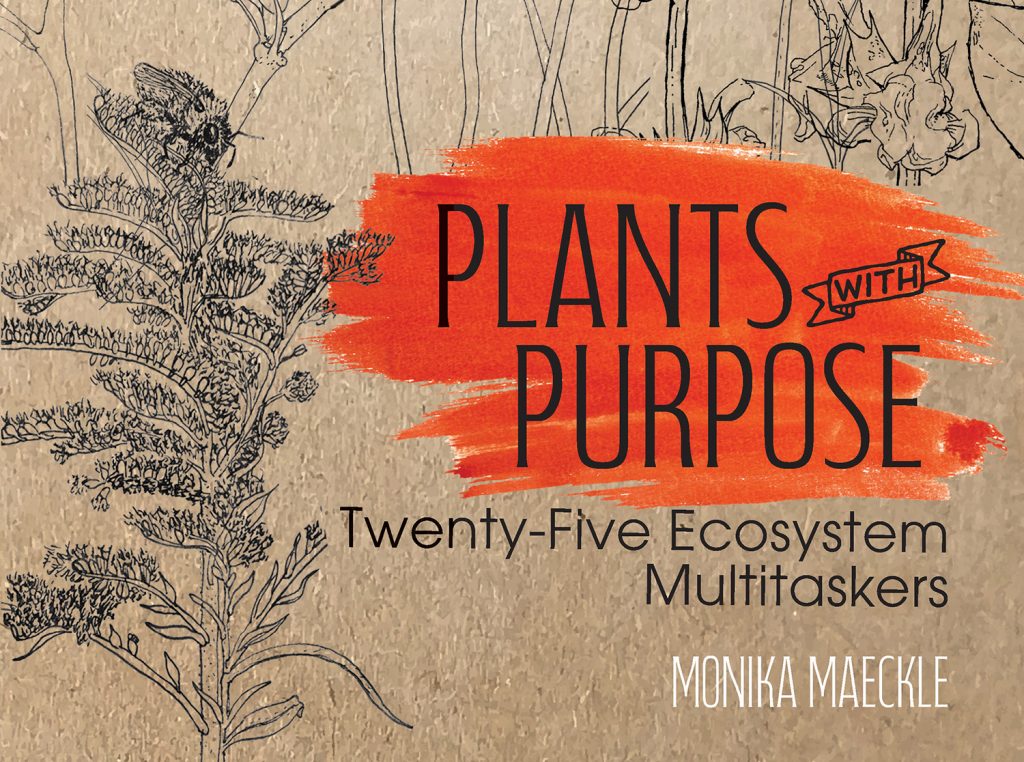
Check out Wild onion, Chapter 25, in my book!
Related posts:
- Agarita crop goes from “gangbuster” to busted this year
- Mild spring brings a bumper crop of agarita, but high temps likely to cut season short
- Gangbuster agarita crop fuels birds, bees, critters and people in Texas Hill Country
- Damn you, Malta star thistle! Ornery invasive takes up residence in Texas Hill Country
- Bastard Cabbage, a rambunctious and tasty invasive, is ousting our native Texas wildflowers
- Scientist and naturalist David Hillis provides holistic and enlightening tour of the Texas Hill Country
- Monarch butterflies heading our way as wildflower bounty awaits
- No monarchs yet, but Red Admirals fluttering through Texas
- Clammyweed named 2024 Pollinator Plant of the Year
- Mostly native urban pollinator garden outperforms lawn every time
Leave A Comment