
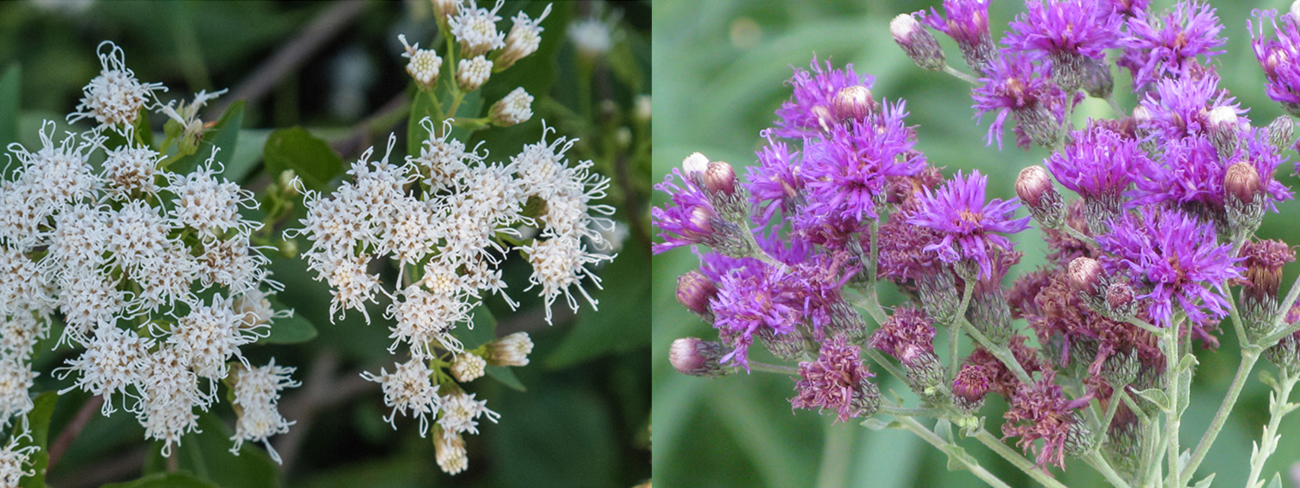
This year’s competition for Pollinator Plant of the Year constitutes a battle of the Asters: Shrubby boneset, a white blooming perennial takes on Woolly ironweed, another perennial with bright purple blossoms.
Both contenders serve pollinators and other wildlife in multiple ways. Both are fantastically attractive, drought tolerant, and easy to grow. And both flaunt bright colors that are especially attractive to bees.
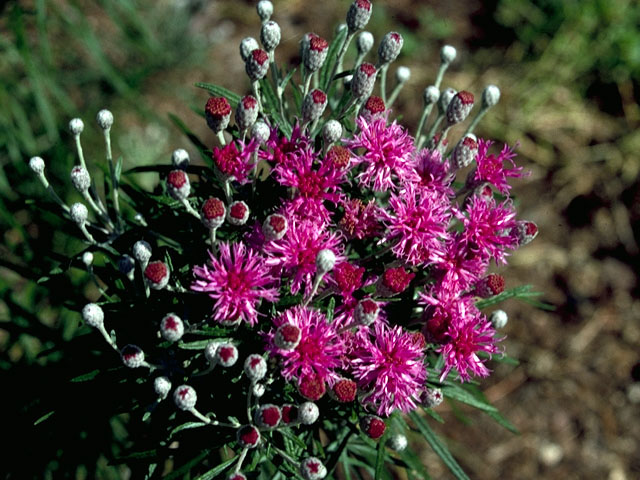
Woolly ironweed. Photo by Norman G. Flagg, LBJ Wildflower Center

Shrubby boneset. –Photo by Susan Schroeder, LBJ Wildflower Center
The worthy candidates follow previous winners, Cowpen daisy (2019), Gregg’s purple mistflower (2020), Frostweed (2021), Gayfeather (2022), Mealy Blue Sage (2023), Clammyweed (2024) and Beebalm (2025).
Started in 2019 by the Texas Butterfly Ranch, the Pollinator Plant of the Year campaign aims to raise awareness of the unsung plant heroes of the pollinator garden. Many overlooked, native plants are frequently unavailable and ONLY found at seasonal pop-up plant sales. Some are only found in the wild. If you miss these occasional opportunities to procure these plant gems, you’re out of luck.
Commercial and retail nurseries often cite “lack of demand” for not stocking these under-appreciated plants, thus they are absent from their stores. That said, the goal of our Pollinator Plant of the Year campaign is to drive demand for more native plants at gardening centers, local nurseries and big box stores. We encourage you to go to your local nursery and request these plants when you’re shopping for plants to occupy your landscape.
And the nominees are…
Shrubby boneset Ageratina havanensis
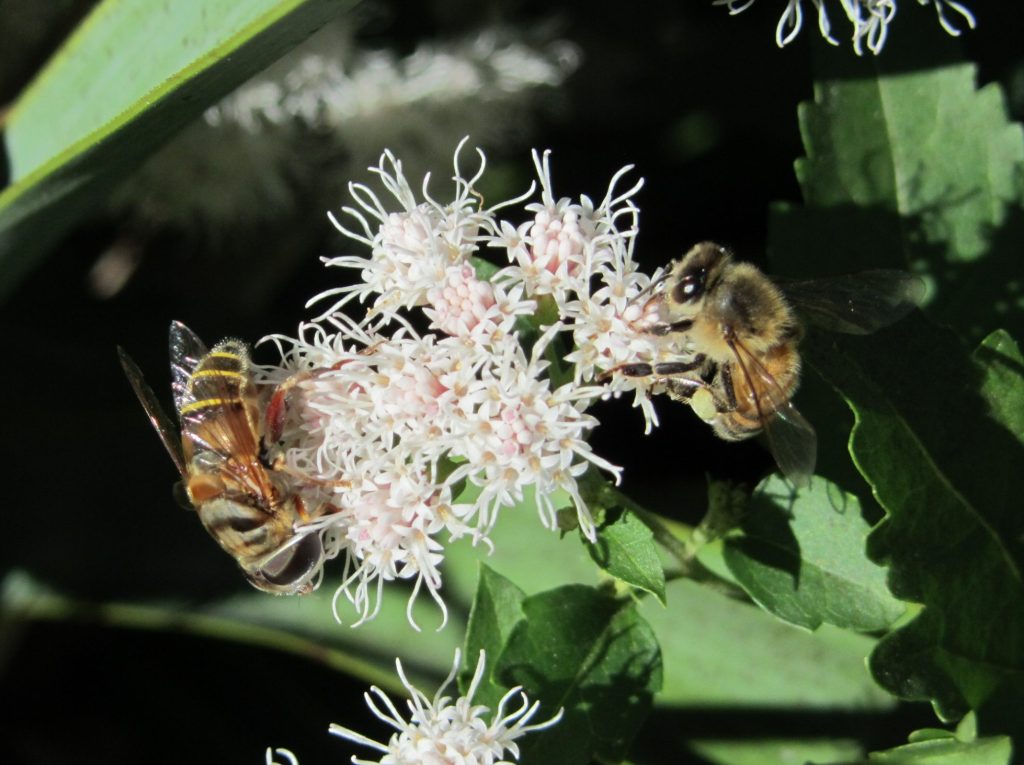
Honeybees work over the fuzzy blossoms of Shrubby boneset. –Photo by Joan Miller
Sometimes called Havana snakeroot or mistflower, Shrubby boneset is one of several species of boneset found in Texas. The white-flowering shrub can grow up to six feet tall and thrives in sun and part shade.
The fuzzy white to pinkish-white flowers are fragrant, showy and can continue blooming as late as December. Shrubby boneset prefers well-drained, rocky, calciferous soils. It is moderately deer resistant.
Shrubby boneset also serves as the host plant to the Rawson’s Metalmark , Calephelis rawsoni, a butterfly native to southern Arizona, south and west Texas and Mexico.
Woolly Ironweed, Vernonia lindheimeri
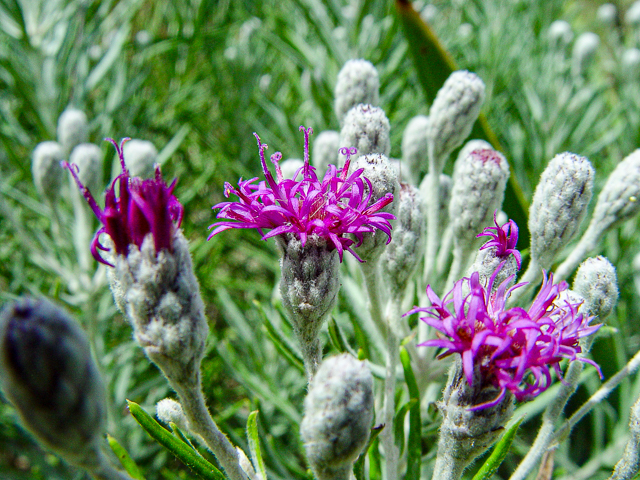
Woolly ironweed early in bloom. –Photo by Charles Ray Newsom, LBJ Wildflower Center
Known for its good behaviour and fuzzy stems, Woolly ironweed can reach 30 inches in height and generally starts blooming in late spring through early fall. The plant thrives in sand, loam, caliche, requires little water and prefers full sun.
Pollinators adore its disc style flowers and birds use its upright structure for nesting. Woolly ironweed is known for its resilience and tough nature–it’s roots are famous for being as sturdy as iron, thus its “ironweed” monicker. The plant grows in dry caliche, clay, and loamy soils and it thrives in the calciferous conditions of the Texas Hill Country. It is highly deer resistant. Another Texas native ironweed, Western ironweed, exhibits the same traits as its Woolly sister, and is another good option in the same family.
Woolly ironweed also serves as a host plant to the American lady butterfly, Vanessa virginiensis.
Tough to decide, right? Please vote at the link below. We’ll report results in early February.
VOTE HERE
TOP PHOTOS: Shrubby boneset, courtesy Ladybird Johnson Wildflower Center, Western ironweed by Joan Miller
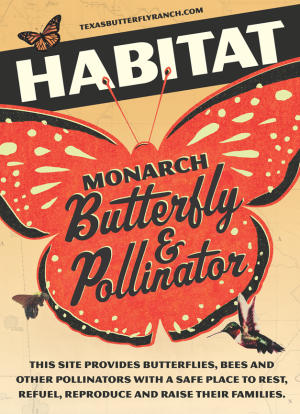
Get a pollinator habitat sign that announces your intentionality.
Related articles:
- Lawn-and-order gardening ethos gives way to the lawnless
- San Antonio architect converts downtown parking lot into a native “prairie cloud”
- Wherehousebarn pollinator garden beckons butterflies and tenants to downtown San Antonio
- In the butterfly garden: use solarization to convert ugly grass into a vibrant butterfly garden
- Adding pollinator habitat to resilience gardens can boost yields and relieve stress
- Mostly native urban pollinator garden outperforms lawn every time
- Flower “bed” works overtime as bachelor pad for solitary bees
- Trinational friendship garden woos pollinators and their fans to Confluence Park
- Doug Tallamy proposes crowdsourcing a homegrown national park: Who’s in?
Like what you’re reading? Don’t miss a single article from the Texas Butterfly Ranch. Sign up for our email newsletter, like us on Facebook, follow us on Twitter, @monikam or on Instagram. And check out my books!
Leave A Comment