
For a humbling and inspiring lesson in how the food gets on the plate, I encourage anyone in a position to do so to volunteer at their local food bank.
The San Antonio Food Bank is one of few in the country that not only supplies the community with free food (among many other services), it also grows much of that food. The lauded nonprofit boasts ownership of 25 acres of farmed land, and it leases another 50 acres from Mission San Juan, a World Heritage site in San Antonio. The food/farm operation provides food to more than 100,000 families each week, an estimated 90 million pounds of food each year.
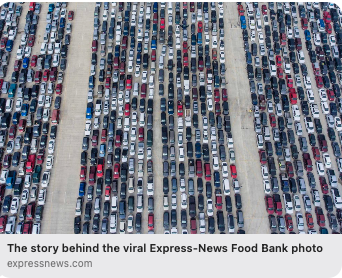
Non locals may have been introduced to the San Antonio Food Bank’s prowess during the COVID epidemic when an iconic photograph taken by San Antonio Express-News photographer William Luther showed thousands of cars lined up at a local food distribution event.
The dramatic shot, taken with a drone camera, succinctly captured the dismay and desperation of so many in our community at a time when lockdown and supply chain issues made basic food and other resources widely unavailable. News organizations from across the country–CNN, 60 Minutes, ABC News, the New York Times and others–showcased the photo, making it emblematic of the COVID moment. Read the moving back story of that photograph and its viral journey here.
Learning about and appreciating the food on our plates and the plants that make them possible is a valuable lesson that all should learn. Too many people have become indifferent to the cycles of nature. This is a theme of my most recent book, Plants with Purpose: Twenty-Five Ecosystem Multitaskers. It’s also the focus of a special dinner taking place at Pharm Table restaurant in San Antonio next week with guest chef Matti Bills.
The sold out event, A Foraged Purposeful Plant and Author Dinner, will benefit victims of the recent flooding in the Texas Hill Country. The dinner also aims to educate guests on the importance of understanding and appreciating the plants that make all life on earth possible. It is sadly ironic (and entirely unacceptable!) that every child knows what lions and tigers and bears are, but is ignorant of asters, sages and oaks. And yet…plants are the organisms that make all life on earth possible, from the air we breathe to the food we eat.
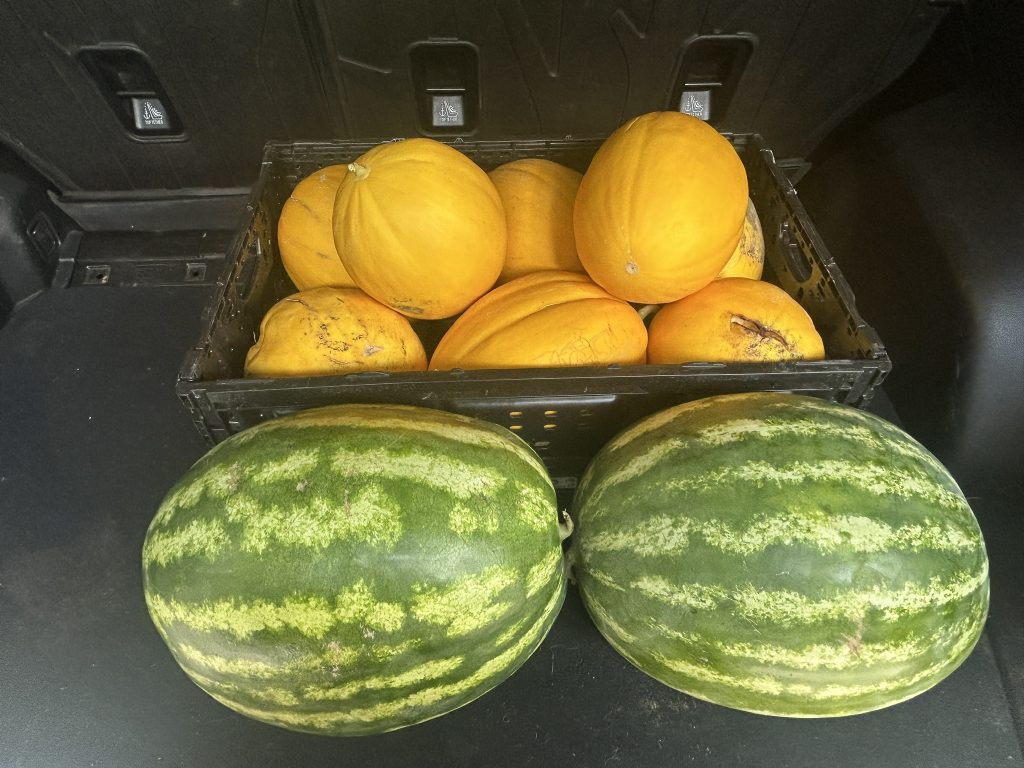
Thanks, San Antonio Food Bank! –Photo by Monika Maeckle
At our foraged, foodie dinner, I plan to demonstrate the making of a shrub (the drink, not the plant). (NOTE: What’s a shrub? It’s a delicious vinegary-but-sweet herbal, vegetable or fruit drink that is simple to make, and allows you to make use of organic surpluses and avoid food waste, by tapping local, available, seasonal food. Have a ton of peaches that you can’t possibly consume? Make a shrub! See recipe at bottom.)
In need of ample local fruit to make this fruity drink for our 50 dinner guests, I called my friend Mitchell Hagney, Director of Food Resilience at the San Antonio Food Bank. He also oversees the Food Bank’s farms.
Did he happen to have any excess fruit to contribute to our cause?
Hagney assured me that the farm had ample Canary melons–all I had to do was come help harvest them.
I signed up to volunteer early Friday morning and the experience was captivating and inspiring.
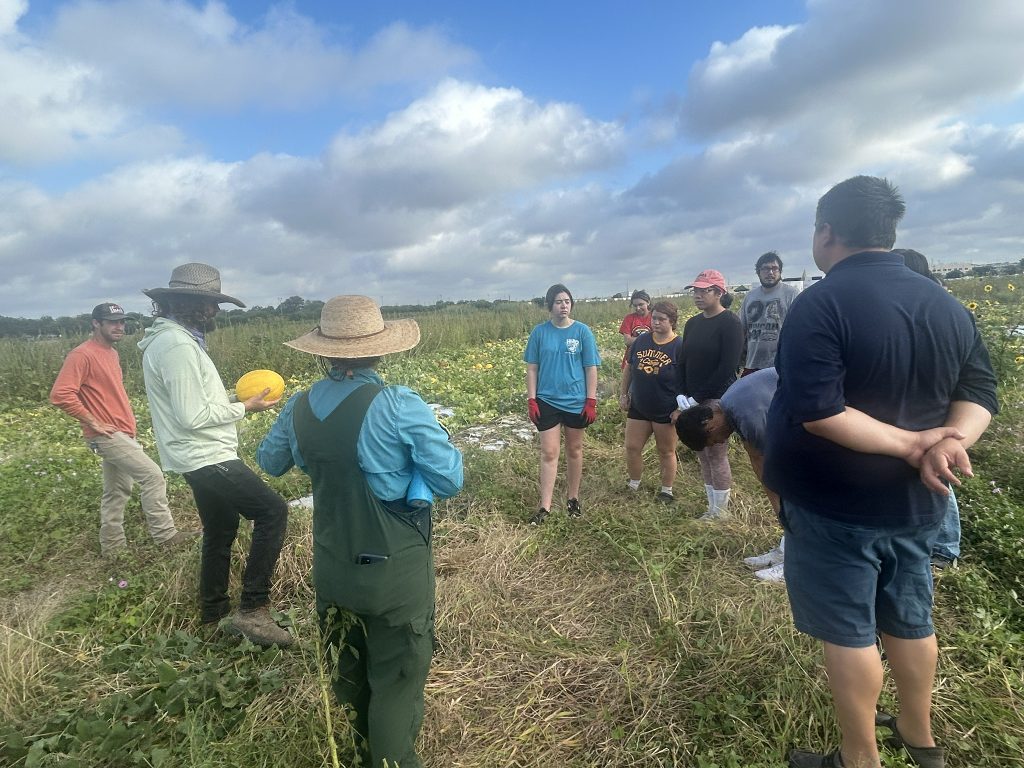
Theresa Shelton (in green overalls), briefs volunteers before their Canary melon harvesting shift. –Photo by Monika Maeckle
San Antonio Food Bank greenhouse manager Theresa Shelton rallied about 15 volunteers for the 8 AM – 10 AM shift. She advised that we would be harvesting Canary melons. The bright yellow-orange gourds are about the size of a cantaloupe, but their flesh is crunchy like Jicama (a Mexican turnip-like tuber) and super sweet.
According to Hagney, the choice of Canary melon came about because of its myriad desirable traits. The melon is tolerant of the Texas heat and easy for volunteers to determine harvest readiness since it turns bright yellow-orange when ripe. The melon is incredibly sweet and few suppliers grow them in our area.
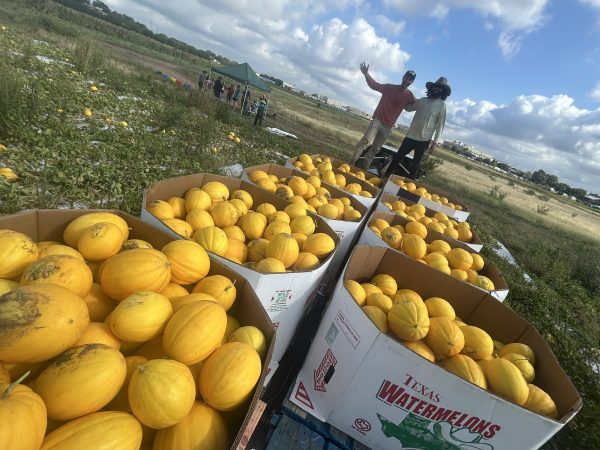
After a thorough briefing from Shelton, our volunteer cohort walked about 10 minutes to the five-acres of Canary melons, planted in 66 plots of 400 square feet. The bright orange melons peeked from spent vine foliage and sat atop irrigation mounds.
San Antonio Food Bank staffers Torin Metz and Adam Petry pulled up in a giant truck/trailer outfitted with cardboard crates. They cranked up an energetic playlist and blasted it through a bluetooth speaker, as we set to harvesting. By the end of the day, 7,500 pounds of Canary melons had been harvested.
The bending and walking and hefting of the melons, which averaged about six pounds apiece, was a great workout. Those of us who count steps were delighted to knock out a large portion of our daily quotient by noon.

San Antonio native Joseph Letow wants to learn more about gardening and the food chain. –Photo by Monika Maeckle
San Antonio native and self-described farmer-in-training Joseph Letow, who studied finance at the University of Texas at San Antonio, said he joined the harvest to give back to the community. “I’m ecstatic to learn more about gardening and farming,” said Letow, as he hefted a couple of melons to food bank staffers standing atop the trailer.
The outing was also an exercise in understanding the food chain, a lesson many need to learn. Just like these Canary melons, those tomatoes and peaches at your local grocery store do not grow in plastic containers that facilitate the convenience of tossing them into your grocery cart.
Someone planted those seeds, watered the plants, and monitored their growth. And when the fruits were ready, human beings (most of the time) harvested the fruits. That sustenance was then inspected and packaged and transported to your local grocery store, farmers market or produce stand.
Just like the names of plants, these are lessons worth teaching. And when you understand what it takes to get the food on the plate, you’re more likely to appreciate it and less inclined to waste.
HOW TO MAKE A SHRUB
from Plants with Purpose: Twenty-Five Ecosystem Multitaskers
Shrubs utilize whole fruits that can even be a bit past their prime, combined with sugar and vinegar to make a tart, zesty addition to iced tea, a cocktail, or fizzy water. Since a shrub contains vinegar, it also is slightly more healthy, as the fermented liquid helps digestion and your gut biome.
The other advantage of shrubs: making use of extra fruit that you have on hand. For example, if you have too many blueberries in the fridge or some peaches in the fruit bowl that need to be used, consider making them into a shrub. Mix and match with other fruits.
Canary Melon Shrub
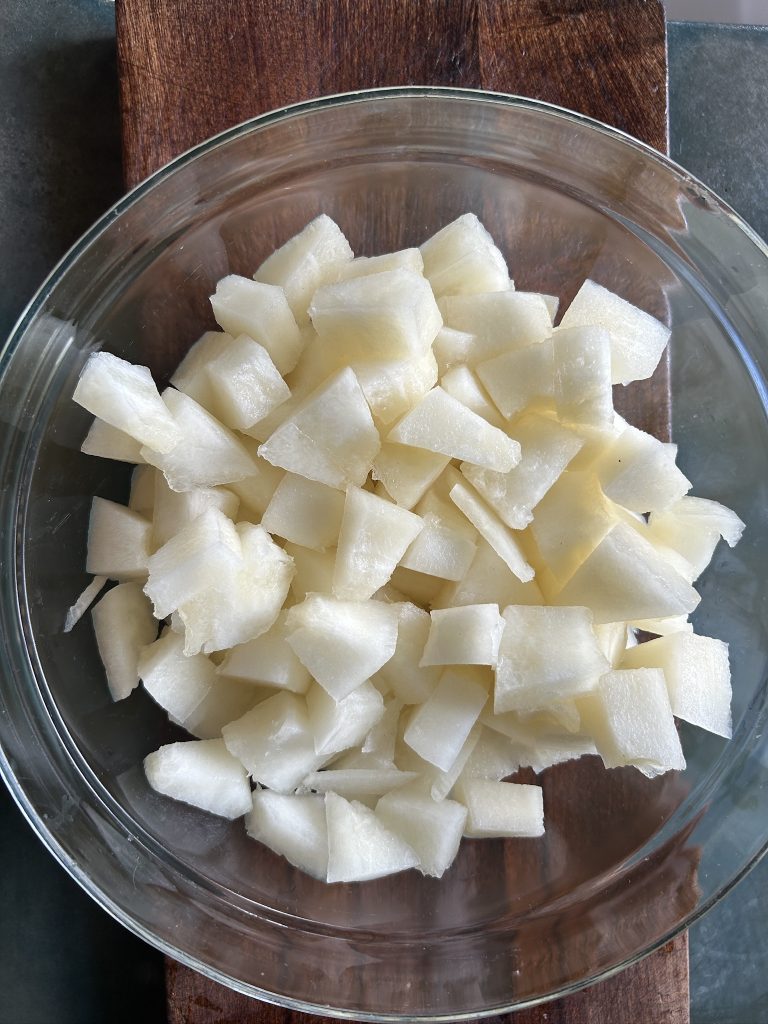
Canary melon shrub in progress. — Photo by Monika Maeckle
Ingredients
1 cup Canary melon (or whatever fruit you have on hand)
1 cup sugar
1 cup white wine vinegar
Available herbs of your choosing
Directions
Cut up melon and remove seeds and pulp.
Mix fruit and sugar in a nonreactive bowl (glass or stainless steel is fine). Mash fruit with spoon or potato masher to bring out its juices. You can also put in blender or food processor. Cover and refrigerate for at least 24 hours.
Stir the mixture, add vinegar and chill. The shrub can be strained and used at this point, but it will take on more character if it sits for a few days. When ready to use, stir to dissolve sugar, strain with a fine sieve, and press the solids against the sieve screen to excrete the most juice.
Pour shrub mixture into a clean, closeable jar, or funnel into a glass bottle that can be closed with a stopper or cork.
To enjoy, add a dash (or more, depending on your taste) to a glass of seltzer, beer, or tea, and serve over ice. Or: add a dash to your favorite cocktail. I’ve been known to use a jigger of shrub in place of simple syrup
NOTE
You can add other flavors to the shrub. Elderberry flowers, mint leaves, basil. Don’t be afraid to experiment. Also feel free to mix up the fruits.
TOP PHOTO: San Antonio Food Bank staffers Adam Petry and Torin Metz celebrate a 7,500-pound of Canary melon harvest. –Photo by Monika Maeckle
Related posts:
- Mother Nature asserts herself with historic flooding in Texas Hill Country
- Multitasking Passionflower encourages passion among Gulf fritillary butterflies
- Queen butterfly: is that a hair pencil in your pocket or are you glad to see me?
- Flowering red yucca waves at drivers navigating traffic on Dallas’ Central Expressway
- Plants with Purpose: Wild onions bolt their bulblet in early spring heat
- Plants with Purpose: Multitasking plants that do more than look beautiful
- Agarita crop goes from “gangbuster” to busted this year
- Mild spring brings a bumper crop of agarita, but high temps likely to cut season short
- Damn you, Malta star thistle! Ornery invasive takes up residence in Texas Hill Country
- Bastard Cabbage, a rambunctious and tasty invasive, is ousting our native Texas wildflowers
- Scientist and naturalist David Hillis provides holistic and enlightening tour of the Texas Hill Country
- Clammyweed named 2024 Pollinator Plant of the Year
- Mostly native urban pollinator garden outperforms lawn every time
Let me say, I moved from Helotes Texas to Mason Texas 2 years ago. Earlier this year, i started to Volunteer at our local food bank because the population is aging, and I thought it would be nice to help. I almost cried one day when I saw the big SA Food Truck, come here and support the people is our tiny little town! I had volunteered in the past at the SA food bank, but had NO IDEA, their out reach!!! Every time they come here, I Thank God and thank the drivers, because they truly are a blessing to those who need it the most!!