
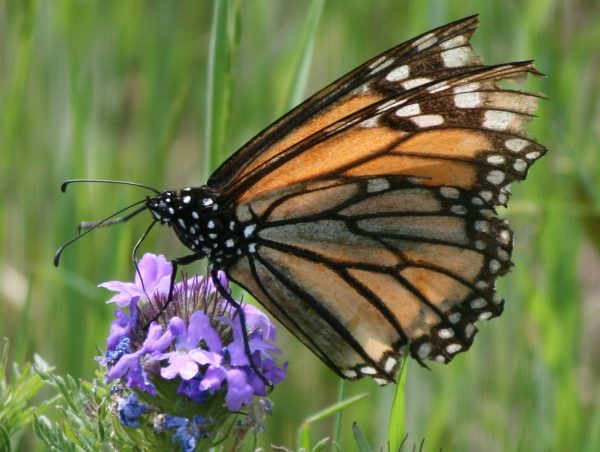
The petition that was launched in August of 2014 to list the monarch butterfly as “threatened” under the Endangered Species Act is now more than a decade old, but the Trump Administration has put the insects’ status once again in limbo.
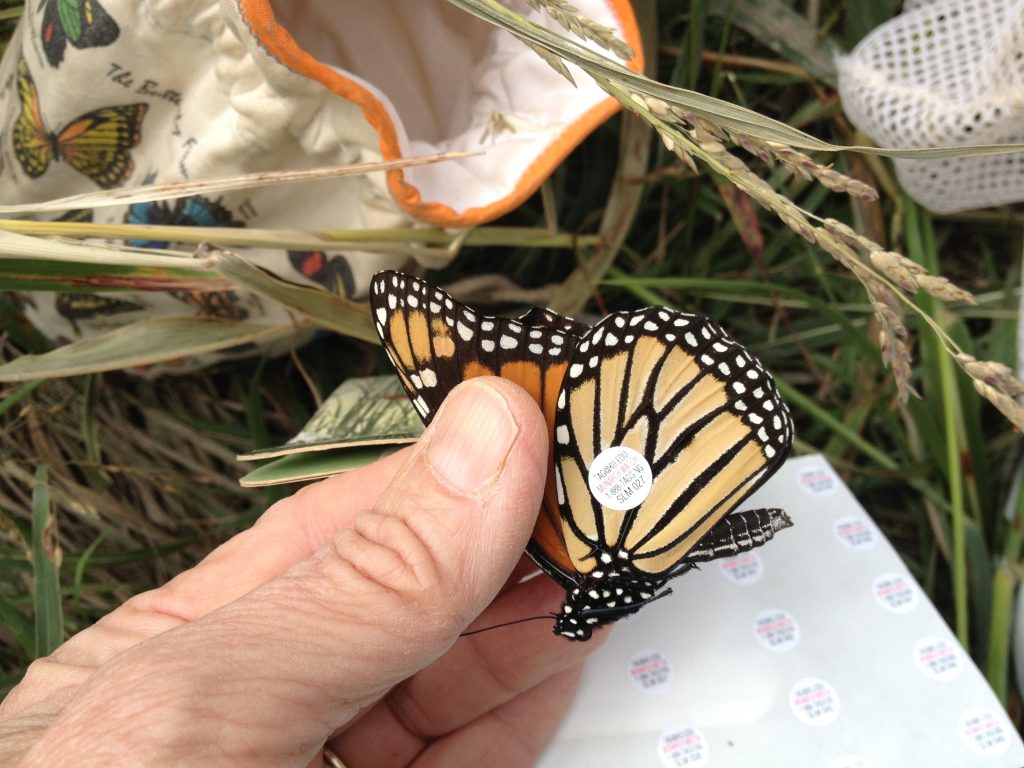
Will citizens scientists still be able to tag monarch butterflies if they are listed as “threatened” under the Endangered Species Act? –Photo by Monika Maeckle
Just one year ago, following 10 years of debate, the U.S. Fish and Wildlife Service proposed listing the monarch butterfly as a threatened species under the Endangered Species Act (ESA). The Department of the Interior was expected to finalize the listing by mid-December this year. Recent proposed ESA changes by the Trump administration, however, have jeopardized any near-term final decision.
The intent of the changes is to “advance President Donald J. Trump’s directives to strengthen American energy independence, improve regulatory predictability and ensure federal actions align with the best reading of the law,” according to a recent U.S. Department of the Interior press release.
Because of this turn of events, the final rulings for the monarch and other threatened creatures are now categorized as “long-term actions” — that is, proposed listings that the agency does not expect to act on within the next 12 months. Several species have spent decades on the “long term actions” list.

Karen Oberhauser, monarch butterfly expert –Courtesy photo
“I’m not surprised at this,” said Karen Oberhauser, professor emeritus at the University of Wisconsin Madison and a longtime monarch butterfly scientist.
Oberhauser, founder of the Monarch Joint Venture and other pollinator advocacy organizations, expressed concerns about the current administration’s recent proposed roll-back of protections for all endangered species and their critical habitats–especially disregarding possible impacts of climate change and considering the cost of protecting a species when listing it.
Oberhauser pointed out that the original 1973 law protected species regardless of the cost.
“In fact, they could not consider economic impacts. The argument was that species extinction is a very consequential event, and the price tag for preventing it shouldn’t be an issue. But current proposals would require analysis of the economic impacts of species listing,” she said, adding “this comes on top of many other decisions that weaken environmental protections in this country.”
Just this week, the Trump administration moved to dismantle the National Center for Atmospheric Research in Colorado, one of the world’s leading Earth science research institutions.
“This was expected as soon as the election results were in last November,” said Chip Taylor, founder of the monarch butterfly citizen science tagging organization Monarch Watch, when asked about the proposed rule changes. “I suspect that many others were expecting this shoe to drop.”
Nor was migration studies expert Andy Davis surprised by the news. “This process has already been dragged out for more than a decade, and my guess is that it is a nightmare for the USFWS to make any decision that doesn’t anger someone. Whether they are listed or not, someone will be angry either way,” said the Odum School of Ecology professor and author of the MonarchScience blog.
Davis believes the listing is unwarranted based on scientific evidence and has vocally opposed it.
That said, any additional delays on the ruling contribute to “further entrenching the dangerous narrative that monarchs need to be saved by people by captive rearing,” Davis said.
The proposed listing has caused wide disagreement in the monarch butterfly community since it occurred more than a decade ago.
Proponents of the listing argue that protecting habit and reducing pesticide use and human intervention will benefit monarchs and other wildlife.
Those opposing it say that declaring a creature “endangered” when its summer breeding population is healthy, its current range spans North America and other countries and is continuing to expand because of climate change and other factors, is misguided and disingenuous. They argue that while the migration is in decline, monarchs are not. The creatures’ habits and range are simply adapting.
Need more context? Check out my recent book, The Monarch Butterfly Migration: Its Rise and Fall.
The postponement of the monarchs’ status didn’t get much attention when it was made public last month because it was buried in a list of more than 170 other species whose status is also being postponed.
The Center for Biological Diversity, which participated in the initial petition to list the monarch, labeled the proposed ESA rule changes “reckless — they’re a death sentence for wolverines, monarch butterflies, Florida manatees, and hundreds of other vulnerable species.”
In a fundraising plea that encouraged people to register a comment on the rule change under the headline “Stop Trump’s extinction plan,” the Center continued: “These proposed changes to the Act will give industry a pass to bulldoze, drill, and destroy precious critical habitat.”
“This is a disappointing development,” wrote Emma Pelton, in a blog post on the Xerces Society website, the organization that led the filing of the original 2014 petition. “Delays in listing mean delays in recovery efforts, making the path more difficult and costly. Now, more than ever, monarch butterflies need our help.”
The comment period for the proposed rules closes at 11:59 PM on Monday, December 22. Register your comments at this link.
TOP PHOTO: Tattered monarch butterfly. Photo by Carol Clark
Related articles
- Monarch butterflies listed as “threatened” under the Endangered Species Act
- New study: monarch migration at risk, monarch butterflies are not
- USFWS rules monarch butterflies worthy of protection, but they don’t have resources to protect it
- As ESA listing looms, new study challenges dogmatic narrative that monarchs are in decline,
- “Weird” weather has scientists concerned about this year’s monarch butterfly migration
- “Snoutbreak” in Central and South Texas: American Snout butterflies inundate Hill Country
- Declining monarch butterflies: Mexico population drops 59%, West coast population down 30%
- Recent IUCN “endangered” listing creates confusion for monarch butterfly fans
- IUCN revises listing of monarch butterfly from “endangered” to “vulnerable”
- Endangered Species Act: wrong tool for monarch butterfly conservation?
- USFWS gets three more years to evaluate monarch butterfly ESA status
There was enough science for the IUCN to withdraw their endangered ruling. I cover it here on Wizzie Brown’s podcast: https://www.youtube.com/watch?v=MmQh90XOmOg
More recent research, which I added to my 2025 Texas Master Naturalist presentation, discusses how nectar plants diminish as Monarchs travel south through Texas. The summer population is stable, but the over-wintering population is at risk because Monarchs drop out from lack of fuel.
Thank you for bring this to our attention! My letter is sent! Let’s keep the Monarch’s flying, maybe my grandkids will see Monarchs & carry on the backyard garden of captive rearing! Flying happy in Southern California area.
Monarch abundance recovery cannot happen unless there is milkweed abundance recovery. A 2017 study by the USGS indicated that: “1,400,000,000 additional milkweed stems need planting to restore the [eastern] monarch population.”
If, hypothetically, a 30 year time frame was set to meet that 1,400,000,000 stem planting goal it would mean:
46,666,666 new stems would have to be successfully established per year, 3,888,888 new stems would have to be successfully established per month, 129,629 new stems would have to be successfully established per day.
Obviously it could never be logistically feasible for conservationists to ever achieve such an ambitious planting goal . So this means eastern monarch population recovery is not possible, especially since this 30 year planting scheme doesn’t take into account that 1,000,000+ already existing stems of milkweed in the eastern USA that are destroyed each year by various human activities.
Please save these beautiful Monarchs. I myself plant milkweed to have food for them.
They are one of God’s unique masterpieces. They are to be cherished not destroyed.
I personally believe the population is down so much because of A. Chemtrails dispensing toxic chemicals (humans have also been severally injured) B. the CDC creating the “fight the bite “ program in 2023 which contains Malathion (renamed to fyfanon) which killed 200 of my caterpillars last spring! That program has Got to Go and the weather warfare program which causes all the weather issues (go research geo engineering, they have a website). The climate change scenario has been debunked. There are many scientific reports regarding this and in addition bill gates said at the White House he was wrong about climate change. My yard has been poisoned by the pesticides and in addition i have had morgellons and now Lyme.I barely have any butterflies and didn’t raise any all summer, it is a total nightmare because in addition the human population has been threatened!! I have so much milkweed … it is a crying shame and upsets me to no degree!!! I filed a complaint with the department of agriculture and they did a complete investigation. I worked on this issue to 2 years! This is the “bad guys” causing all these problems! It is going to take a while for the Trump administration to weed them out of the government God Bless you for loving the Monarchs… People have got to talk to the administration and CDC!!! People can write the White House on their page… address it to the president all your concerns, believe me he will read this info, i have been in contact several times.