
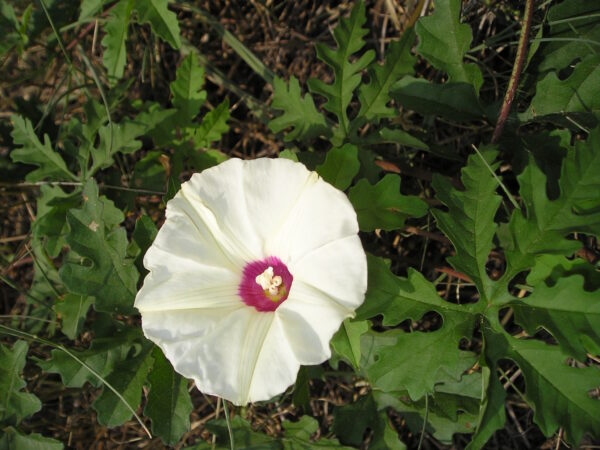
Yes, it’s native. And yes, it has a gorgeous morning glory-like flower. It’s drought tolerant, requires no fertilizers or feeding, attracts pollinators and produces an attractive seed pod that can be used as a natural decoration when dried.
So what’s the problem with Alamo vine, Distimake dissectus formerly known as Merremia dissecta?
 Alamo vine doing its thing.
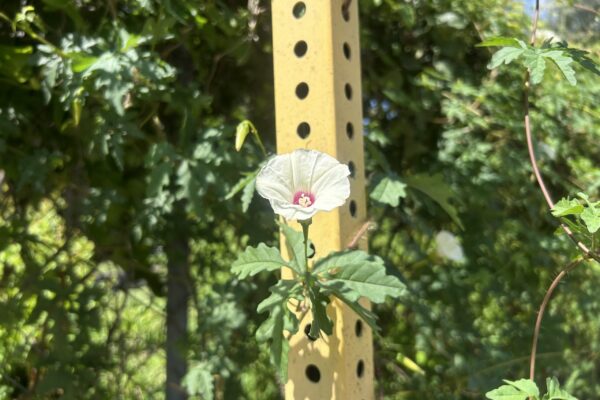
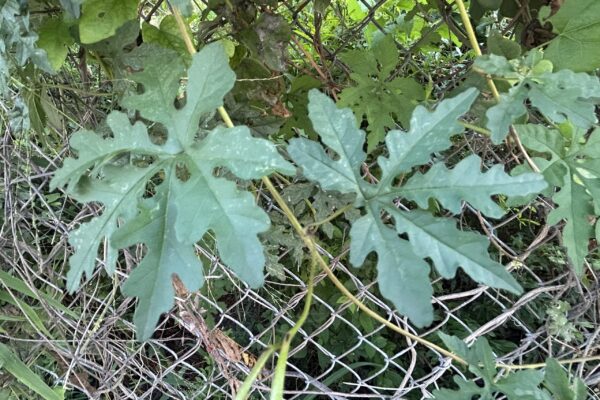
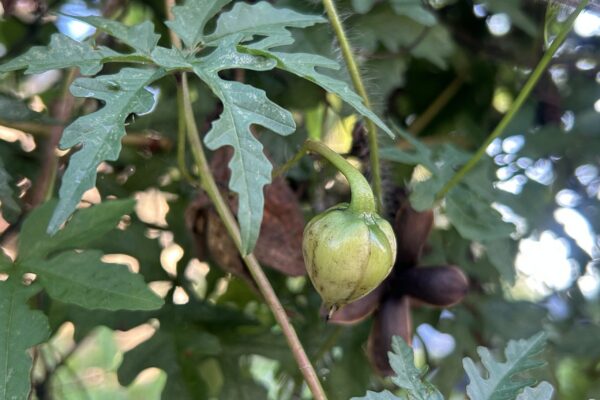
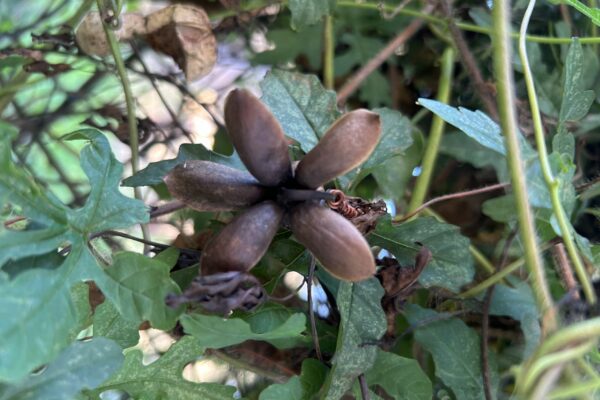
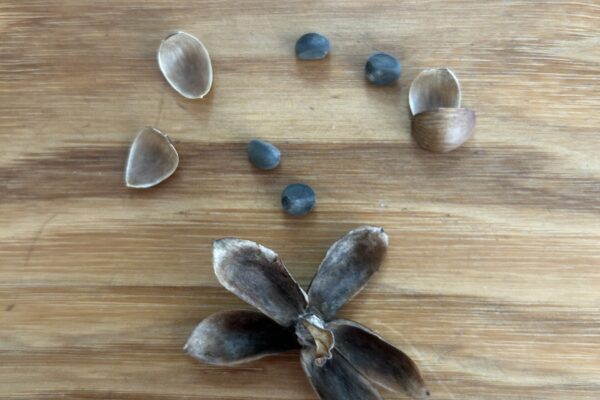
The plant is outrageously rambunctious. I never invited it into my yard, yet this self-invited intruder has pretty much taken over. As the Ladybird Johnson Wildflower Center noted in their plant profile of Alamo vine, “This species can be very aggressive in the garden.”
It creates huge matts, chokes out the sun–basically a carpet that deprives my sun-loving agarita bushes and flowering red yucca from light. It twists its insistent stems around my Esperanza and other intentionally planted bushes, making itself the center of attention. Granted, our unusual rainy summer has amplified its growth, resulting in Alamo vine behaving like a pain in the yard.
One participant on the National Gardening Association’s forum compared the plant to one of the most invasive in the country.
Check out my books!
“Alamo Vine isn’t quite as bad as kudzu, but almost. It is a rampant self-seeder and will quickly cover a trellis, fence, barn….well, maybe not a barn,” wrote GrammaChar. “Just when I think it’s gone, we get a bit of rain and two dozen more plants sprout.”
Despite its unruly reputation, Alamo vine has many attributes.
Pollinators love it. Bees and butterflies frequent its beautiful white, burgundy-centered flowers, which bloom pretty much all day. The flowers are framed by ornate, palmate foliage, with the leaves resembling an oak’s. After flowering, Alamo vine creates a teardrop shaped fruit. When that orb dries, the pod busts open and reseeds the aggressive vine to return the following year. Certain birds (apparently quail in particular) eat the seeds. Alamo vine also serves as a host plant to the Painted crescent butterfly, which is native to West Texas.
Supposedly, the hyperactive climber got its name because it was commonly found in areas around the Alamo in San Antonio. When I asked friends at the Alamo about any records or background on Alamo vine, they said they were unfamiliar with it.
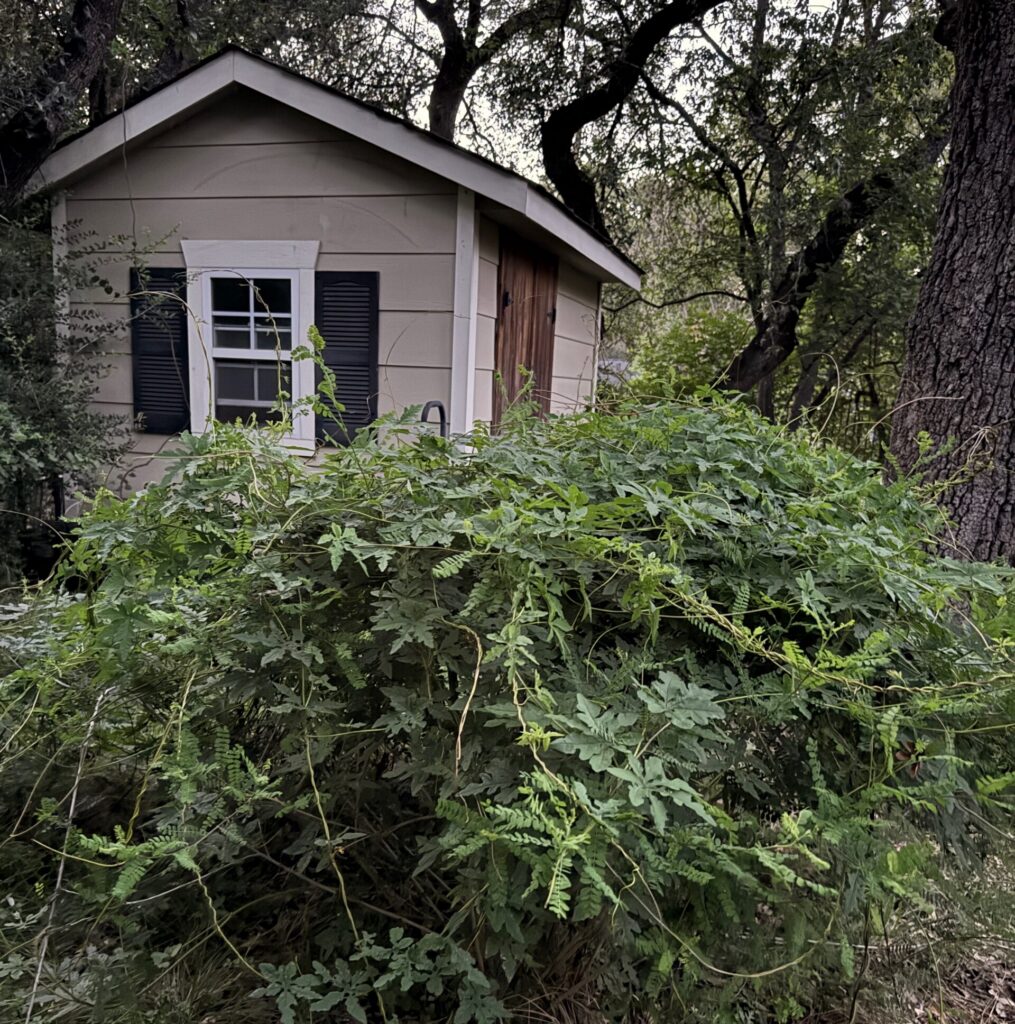
Alamo vine protecting a Kidneywood bush. –Photo by Lee Marlowe
Drake White, owner of the Nectar Bar, San Antonio’s first native plant nursery, is more forgiving of Alamo vine.
“It’s helpful to understand who plays well with others, and who doesn’t. For me, Alamo vine behaves well. But it’s planted in the shade, and is completely ignored.” White agreed that this year’s ample rain boosted Alamo vine’s already robust growth habit. “Luckily, it’s paired up with a volunteer Virginia creeper, and I can let them fight it out.”
“Alamo Vine— it’s complicated,” says Diane Gracia, president of San Antonio’s chapter of the Native Plant Society of Texas. Gracia said she’s learned to give the vine its own stage on which to shine, because it doesn’t believe in staying small, but makes a great fence cover “where it can stretch its legs without crowding neighbors.”
She added that for years she placed two small plastic swimming pools around the base of her Alamo-vine-covered arbor so that when the seeds disbursed, the pools would catch the them. Eventually, she removed the vine from that area. “It’s an ongoing task. Both Alamo vine and I are happier now.”
Others suggest looking at vines on a case-by-case basis.
“Sometimes the vines are helping the other plants by shading and protecting a young tree in the summer heat,” restoration ecologist Lee Marlowe pointed out.
Marlowe shared a photo of a beloved Kidneywood shrub, a desirable, white-blooming pollinator magnet, covered in Alamo vine. She finds that in her neighborhood which has a roaming deer population, the vine protects the bush from foraging. “Sometimes they’re just sharing the same space and providing more wildlife benefits in that space,” she explained.
TOP PHOTO: Alamo Vine flower –Photo by Lee Marlowe
Related posts:
- Kiss your Aster and cheers to the Bordered Patch Butterfly! It’s National Pollinator Week!
- Hey Calvin Finch–you’re wrong about Jimson Weed
- Multitasking passionflower inspires passion among Gulf Fritillary butterflies
- Queen butterfly: is that a hair pencil in your pocket or are you glad to see me?
- Flowering red yucca waves at drivers navigating traffic on Dallas’ Central Expressway
- Plants with Purpose: Wild onions bolt their bulblet in early spring heat
- Plants with Purpose: Multitasking plants that do more than look beautiful
- Agarita crop goes from “gangbuster” to busted
Like what you’re reading? Don’t miss a single article from the Texas Butterfly Ranch. Sign up for our email newsletter, like us on Facebook, follow us on Twitter, @monikam or on Instagram.
Wish Alamo Vine would take up residence in my yard — I have planted seeds and even small plants that sprouted but none have survived. The wonderful native Crooked Leg Bee (ancyloscelis) loves the flowers!
Let me know if you want seeds or seedlings. Got plenty! –MM
I’m able to collect seeds from a robust vine in a neighbborhood green belt. But thanks for the offer!