
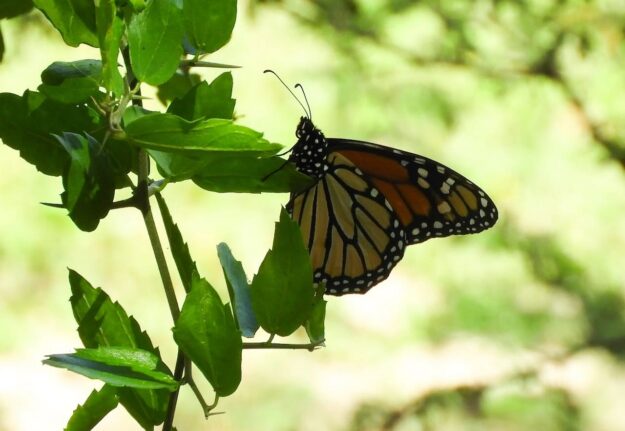
Monarch butterflies have begun their annual fall migration in what is likely to be one of the hottest years since records have been kept. With triple digit temperatures still dogging Texas flyways, challenges await.
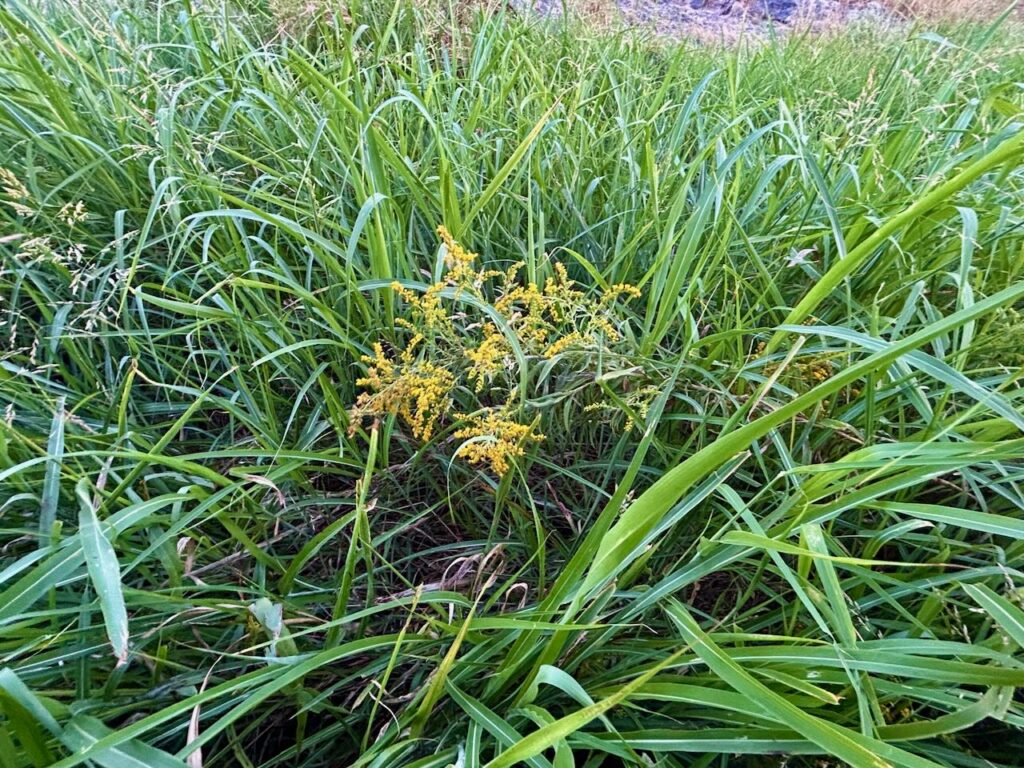
Lonely Goldenrod competes with robust Johnson grass along the Llano River in the Texas Hill Country last weekend. –Photo by Monika Maeckle
A recent ranch outing to the Llano River where the iconic insects’ traditionally roost each October wrought temperatures approaching 100. The usual patches of Goldenrod and Frostweed–favorite nectar sources for the butterflies–were much diminished for this time of year. Many budding stems were washed away in another July flood, and upon recovering, found themselves competing with invasive Johnson grass.
Kristen Baum, director of Monarch Watch, the community science tagging and conservation organization based at the University of Kansas at Lawrence, called the 2026 season “promising” for monarch production throughout much of the summer breeding range. That said, Baum, along with other monarch experts, labeled this year’s late season conditions “challenging.”
Nectar resources could be scarce until the insects reach Mexico, where they spend the winter, she said, adding, “Overall, I’m expecting higher numbers than in recent years.”
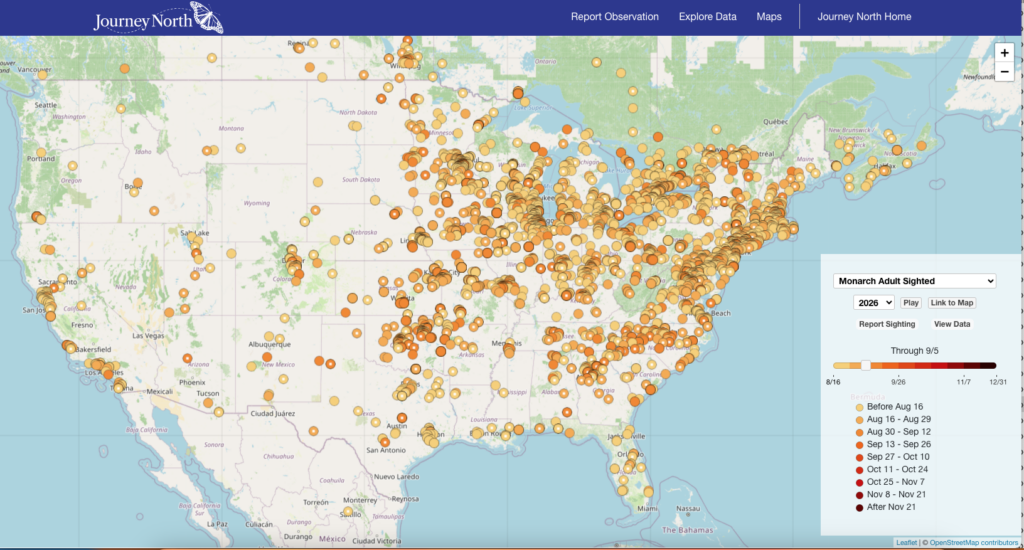
Journey North monarch butterfly migration tracking map shows status of migrating monarchs as of September 3, 2026. –Journey North
Several monarch scientists agreed that the brutal heat along the migratory flyway known as the Texas Funnel through which all migrating monarchs must pass en route from the northern U.S. to Mexico creates specific challenges. An El Niño fueled heat dome has been shifting around the state, keeping temperatures in the high 90s and above, with heat indexes of 108 and more.
Hot temperatures cause the insects to stop flying because it’s too exhausting. Heat also makes them burn through the fats that they need to survive the winter when temperatures drop. “Heat is number one, wind is number two, and drought is number three,” said Chip Taylor, Monarch Watch founder.
Like Baum, Taylor said he was quite optimistic earlier in the year regarding this year’s migration. But with the continuous high temperatures and challenges to nectar plants in such a context, he’s withholding judgement. “Things were looking good but now it’s too damn hot.”
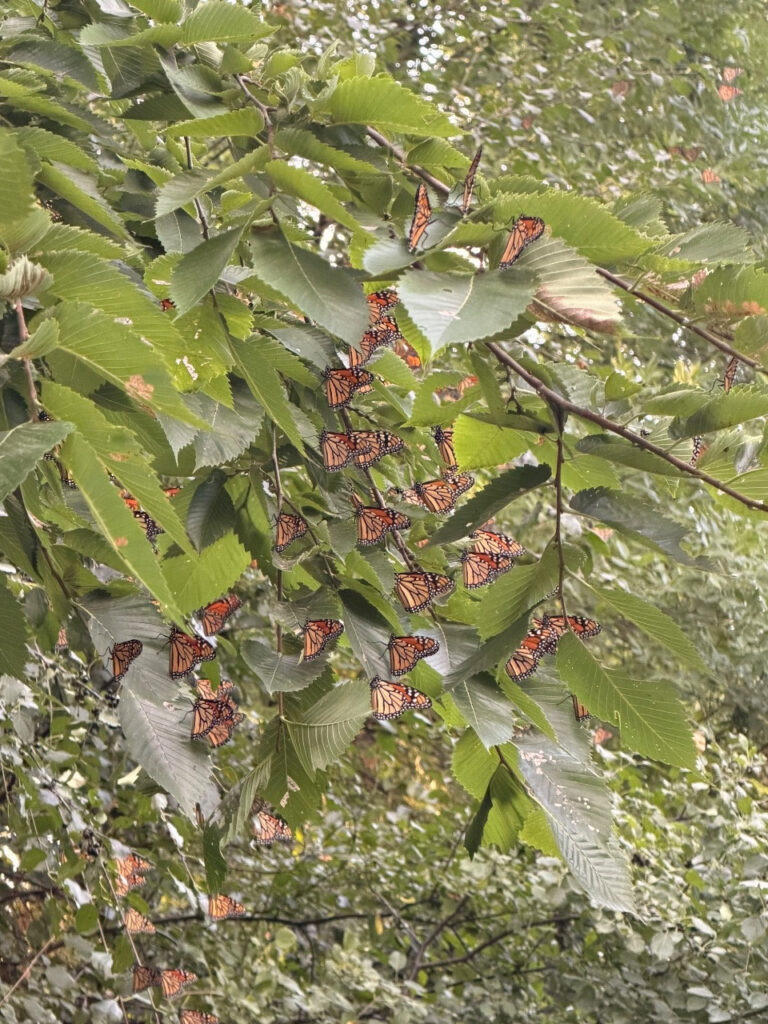
A roost spotted in Lake Park, Minnesota on August 17. –Photo via Journey North
Karen Oberhauser, based in Wisconsin and a longtime monarch butterfly expert and founder of Monarch Joint Venture, agreed that climate conditions will test the insects.
“We’ll likely see normal numbers at the beginning of the migration, but small numbers reaching Mexico,” she said.
She pointed out that monarch numbers were low early in the spring, then picked up to similar counts to what we witnessed in July of 2025. Mid- to late-summer monarchs (the ones that will migrate south) were higher than in 2024, but lower than in 2023.
“So, we’re sending you about what we sent last year,” she said, stressing that what will determine the overwintering population will not be how many leave, but how many survive the journey. “The current drought monitor map doesn’t look great for the journey through the southern U.S. Riparian corridors will be important to them.”
Andy Davis, Limited Term Assistant Professor of Environmental Science at Kennesaw State University in Georgia who runs The Thoughtful Monarch Facebook page, agreed: the heat will test the insects.”The warm weather is not good for the success of the migration, as it makes monarchs either late in joining the migration, or, they burn too much energy during the trip. So we’ll likely see normal numbers at the beginning of the migration, but small numbers reaching Mexico,” he said.
Wendy Caldwell, Executive Director of Monarch Joint Venture concurred, acknowledging this year’s challenging circumstances but “hopeful about what that could mean for the size of the overwintering population,” she said.

Check out my books!
A 2025 study determined that when exposed to high heat, female monarchs dump their eggs, even if milkweed, their host plant is unavailable. In addition, the heat also degraded the overall health of male monarchs, making them less hearty for surviving the winter in Mexico.
As of this writing, the National Weather Service predicted that Tropical Storm Edouard, which made landfall Tuesday afternoon near the Texas-Louisiana border, would bring much-needed rain to North Texas, breaking a 47-day dry streak.
TOP PHOTO: Solo monarch butterfly takes a break. –File photo by Monika Maeckle
- Migrating monarch butterfly population up 64% over last year
- Monarch butterflies depart Mexico
- New study: Hot temps cause monarch butterflies to ‘drop out’ of their annual migration
- Butterfly Bonanza on the Llano River this weekend–everything buy monarchs
- Monarch butterflies heading our way as annual fall migration takes flight
- Monarch butterfly numbers vault 99% over last year’s historic low, California population teetering
- Commercial butterfly breeders brace for devastating hit as monarch ESA listing looms
- Monarch butterflies listed as “threatened” under the Endangered Species Act
- A tense online debate: raising monarch butterflies at home
- New study: monarch migration at risk, monarch butterflies are not
- USFWS rules monarch butterflies worthy of protection, but they don’t have resources to protect it
Like what you’re reading? Don’t miss a single article from the Texas Butterfly Ranch. Sign up for our email newsletter, like us on Facebook, follow us on Twitter, @monikam or on Instagram.
Leave A Comment